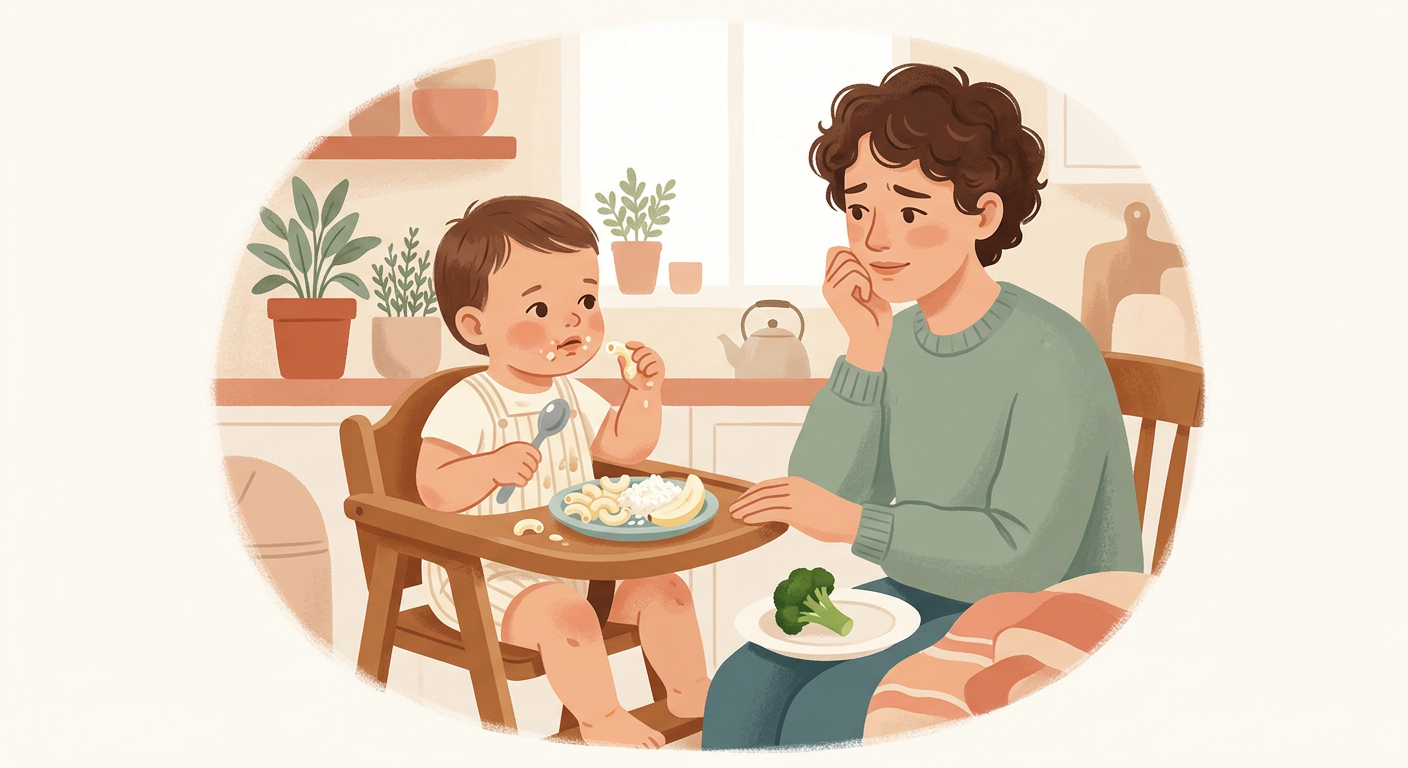
Your 2-year-old has decided today they're only eating "white food." Pasta, yes. Rice, yes. Banana, fine. Broccoli is a personal insult. It's been like this for three days. You...
This is just 1 of 100+ questions in the Parenting Test
Want to know your real style and get a full diagnosis? Takes 2 minutes, free.
Take the Parenting Test →Why this situation matters
Lidiar con un niño pequeño que de repente se niega a comer ciertos alimentos, o que solo quiere comer "blanco", es un escenario común que muchos padres y madres enfrentan. Esta fase, a menudo llamada neofobia alimentaria, es una parte normal del desarrollo infantil, aunque puede ser frustrante y agotadora para los adultos a cargo.
La forma en que respondemos a estos hábitos alimenticios selectivos puede tener un impacto significativo en la relación de nuestros hijos con la comida a largo plazo. No se trata solo de la nutrición inmediata, sino de enseñarles hábitos alimenticios saludables, fomentar una actitud positiva hacia una variedad de alimentos y evitar luchas de poder en la mesa. Las comidas deben ser un momento de conexión, no de conflicto.
Comprender cómo abordar estas situaciones desafiantes, sin presionar en exceso ni ceder completamente, es clave para criar comedores equilibrados y felices. ¿Estás manejando estos momentos de forma que promueva una buena relación con la comida para tu hijo?
The possible answers
These are the options you'll see in the test. Each one measures something different — we won't tell you which is best here (that's what the test is for 😉).
- AYou force them to try the broccoli, even if they end up crying.
- BYou serve their usual meal + a tiny piece of broccoli, no pressure.
- CMacaroni again. You'll deal with it tomorrow.
- DYou hide pureed broccoli in the sauce.
What the experts say
Ellyn Satter
child feeding expert
“The parent is responsible for what food is available, and when and where meals are eaten. The child is responsible for how much they eat and whether they eat.”
Carlos González
paediatrician
“Forcing children to eat is one of the main causes of eating problems in childhood. Eating should be a pleasure, not an obligation.”
Daniel Siegel & Tina Payne Bryson
neuropsychiatrist and psychotherapist
“When children feel in control, they are more cooperative. Pressuring them with food teaches them to resist.”
Devil's advocate
Common objection
What if they never eat anything? I can't let them starve. They need to eat their greens.
Why it falls short
Children rarely starve if offered appropriate options. The key is patience and repeated exposure without pressure, as introducing a new food can require up to 15-20 attempts. Children know when they are hungry and don't need to be forced.
This is just 1 of 100+ questions in the Parenting Test
Want to know your real style and get a full diagnosis? Takes 2 minutes, free.
Take the Parenting Test →Part of the Fami ecosystem
Sites made by families, for families. Start with the two most loved:
The task manager that coordinates your whole family — without the stress.
Visit →famiEduca.comA platform where children learn on their own, the fun way.
Visit →Worldwide guide of destinations and points of interest for family travel.
Restaurants where great food is also for the kids.
Challenges and games to rediscover the joy of playing together.
Easy recipes to cook with the little ones.
Films handpicked to watch as a family.
Reads for small big readers.