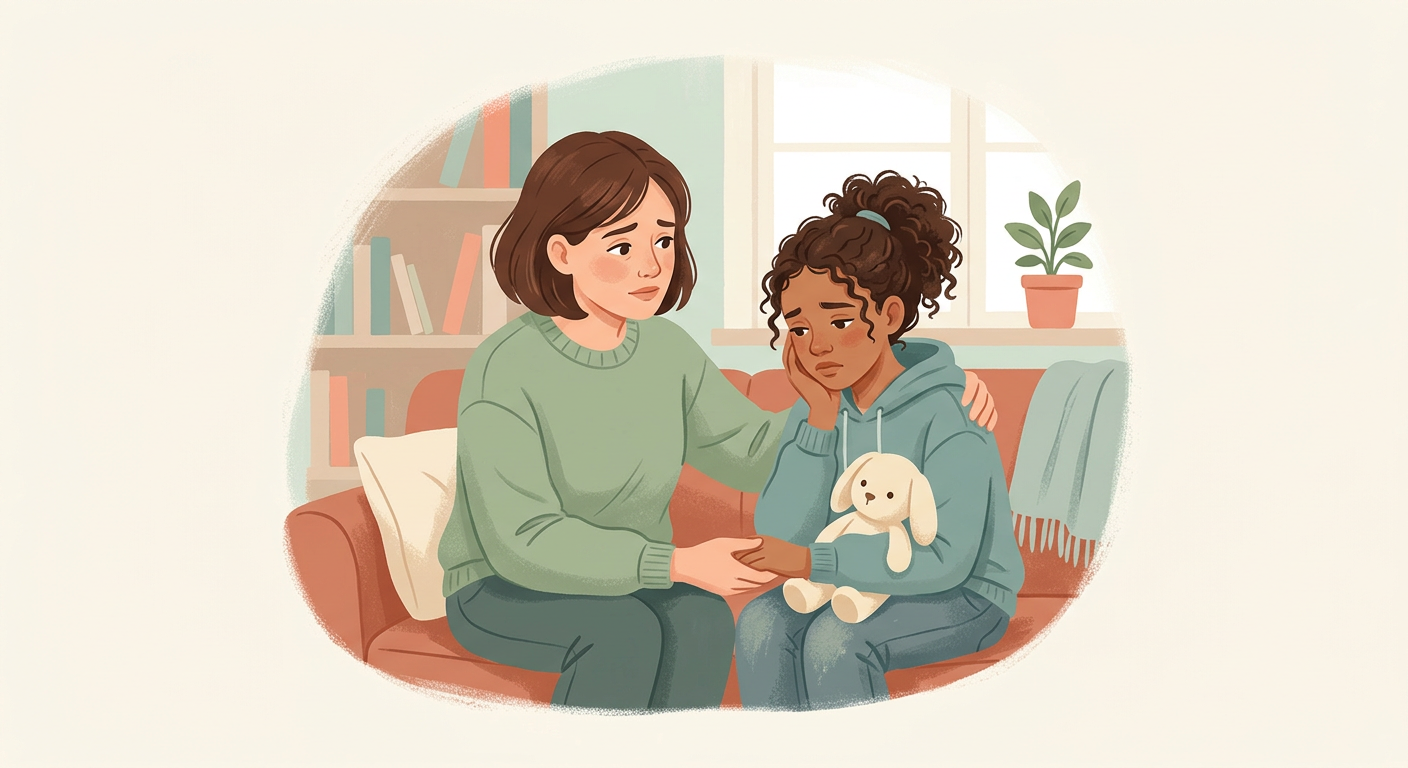
Your 11-year-old daughter comes home from school saying, "I'm ugly and nobody likes me." She's been like this for a week. You...
This is just 1 of 100+ questions in the Parenting Test
Want to know your real style and get a full diagnosis? Takes 2 minutes, free.
Take the Parenting Test →Why this situation matters
Como padres, uno de nuestros mayores deseos es ver a nuestros hijos felices y seguros de sí mismos. Cuando un adolescente, especialmente en la preadolescencia, empieza a expresar sentimientos de inseguridad o baja autoestima, es natural sentirse preocupado y querer intervenir. Esta etapa de la vida está llena de grandes cambios físicos, emocionales y sociales, y es común que los jóvenes cuestionen su valía y su lugar en el mundo. Su sentido de sí mismos todavía está en formación, y las opiniones de sus compañeros pueden tener un impacto significativo, a veces abrumador, en cómo se ven.
La forma en que reaccionamos ante estas declaraciones de nuestro hijo puede influir profundamente en su capacidad para desarrollar una autoestima saludable y en la dinámica de nuestra relación. Es un equilibrio delicado entre validar sus sentimientos, apoyarlos y, al mismo tiempo, enseñarles a construir su propia resiliencia interna. Una respuesta inadecuada, por muy bien intencionada que sea, puede, sin querer, reforzar sus inseguridades o hacer que se sientan incomprendidos. Comprender el impacto de nuestras palabras y acciones es fundamental para guiarlos a través de estos desafíos.
Esta situación nos invita a reflexionar sobre qué tipo de apoyo es el más efectivo. ¿Cómo podemos fomentar una imagen positiva de sí mismos sin anular sus emociones? ¿Y qué papel juegan la comunicación y la escucha activa en este proceso? Descubre cómo tu enfoque puede marcar la diferencia en la autoestima de tu hija.
The possible answers
These are the options you'll see in the test. Each one measures something different — we won't tell you which is best here (that's what the test is for 😉).
- A"What are you talking about? You're gorgeous!"
- BYou ask her what happened and listen without trying to fix it.
- CYou talk to her teacher without telling her.
- DYou buy her new clothes to cheer her up.
What the experts say
Carl Rogers
Humanistic Psychologist
“Empathy is listening with one's own ear, one's own mind, one's own heart, and one's own skin.”
John Gottman
Relationship Researcher
“Emotional attunement involves being present for the child, understanding their feelings, and validating them.”
Adele Faber y Elaine Mazlish
Family Communication Experts
“Children need us to honor their feelings, not to fix them.”
Devil's advocate
Common objection
But if I don't give her a solution or tell her how pretty she is, aren't I leaving her alone with her pain or making her think she really is ugly?
Why it falls short
On the contrary, giving her ready-made solutions or telling her how pretty she is implies that her emotions are fragile or incorrect. Listening to her gives her the space to find her own strengths and solutions, and validates her discomfort, making her feel supported.
This is just 1 of 100+ questions in the Parenting Test
Want to know your real style and get a full diagnosis? Takes 2 minutes, free.
Take the Parenting Test →Related questions
Part of the Fami ecosystem
Sites made by families, for families. Start with the two most loved:
The task manager that coordinates your whole family — without the stress.
Visit →famiEduca.comA platform where children learn on their own, the fun way.
Visit →Worldwide guide of destinations and points of interest for family travel.
Restaurants where great food is also for the kids.
Challenges and games to rediscover the joy of playing together.
Easy recipes to cook with the little ones.
Films handpicked to watch as a family.
Reads for small big readers.