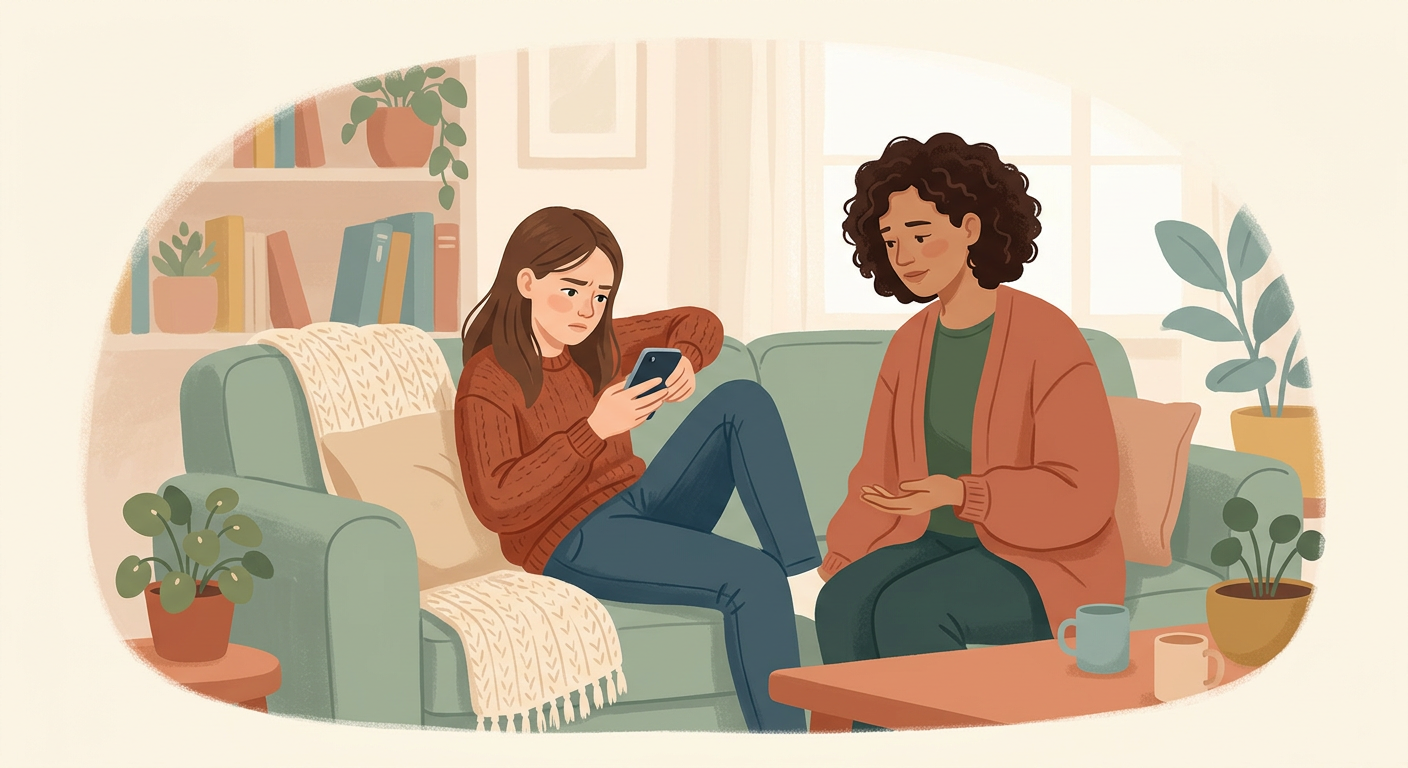
Your 15-year-old daughter has a friend who is clearly using her: copying her tests, bailing on her, and only showing up when it's convenient. You…
This is just 1 of 100+ questions in the Parenting Test
Want to know your real style and get a full diagnosis? Takes 2 minutes, free.
Take the Parenting Test →Why this situation matters
Es natural que, como padres, nos preocupemos profundamente por las relaciones de nuestros hijos, especialmente cuando notamos dinámicas que podrían ser perjudiciales. La adolescencia es una etapa crucial para el desarrollo social y emocional, y las amistades juegan un papel fundamental en la formación de la identidad y la autoestima.
Ver a tu hija en una amistad desequilibrada puede generar frustración e impotencia. Queremos protegerla de cualquier daño, pero también es importante fomentar su autonomía y su capacidad para navegar el mundo social por sí misma. Intervenir de manera efectiva requiere un delicado equilibrio entre apoyo y permitirle aprender lecciones vitales.
Comprender cómo guiarla a través de estas experiencias sin minar su confianza o su sentido de independencia es clave. La forma en que manejemos estas situaciones puede influir en su capacidad para establecer límites saludables y elegir relaciones positivas en el futuro. ¿Te gustaría explorar cómo abordar esta situación con sabiduría y empatía?
The possible answers
These are the options you'll see in the test. Each one measures something different — we won't tell you which is best here (that's what the test is for 😉).
- AForbid her from seeing this friend
- BHelp her recognize the pattern through questions, not judgments
- CDon't get involved; it's her business
- DTalk to the friend's mother
What the experts say
Laurence Steinberg
Professor of Psychology, Temple University
“The key in adolescent parenting is finding the balance between granting freedom and setting clear limits. An authoritative but supportive style, like Baumrind's, is the most effective.”
Robert L. Selman
Professor of Education and Human Development
“As children grow, their understanding of friendship evolves from an egocentric focus to one of intimacy and mutual support. Parents should help them reflect on reciprocity in relationships.”
Daniel J. Siegel
Neuropsychiatrist and author
“Adolescence is a stage of significant brain changes. Helping teenagers develop skills in reflection, resilience, and understanding how their decisions affect their relationships promotes healthy development.”
Devil's advocate
Common objection
Do I really have to watch my daughter get hurt over and over by the same person? Sometimes they need us to save them from their bad choices.
Why it falls short
Your protective instinct is natural. However, constantly 'saving' them doesn't teach them to navigate obstacles themselves. Guiding them to understand the situation equips them with tools for the future, strengthening their judgment. Instead of rescuing them, you're empowering them. It's an act of faith in their capacity to learn.
This is just 1 of 100+ questions in the Parenting Test
Want to know your real style and get a full diagnosis? Takes 2 minutes, free.
Take the Parenting Test →Related questions
Part of the Fami ecosystem
Sites made by families, for families. Start with the two most loved:
The task manager that coordinates your whole family — without the stress.
Visit →famiEduca.comA platform where children learn on their own, the fun way.
Visit →Worldwide guide of destinations and points of interest for family travel.
Restaurants where great food is also for the kids.
Challenges and games to rediscover the joy of playing together.
Easy recipes to cook with the little ones.
Films handpicked to watch as a family.
Reads for small big readers.