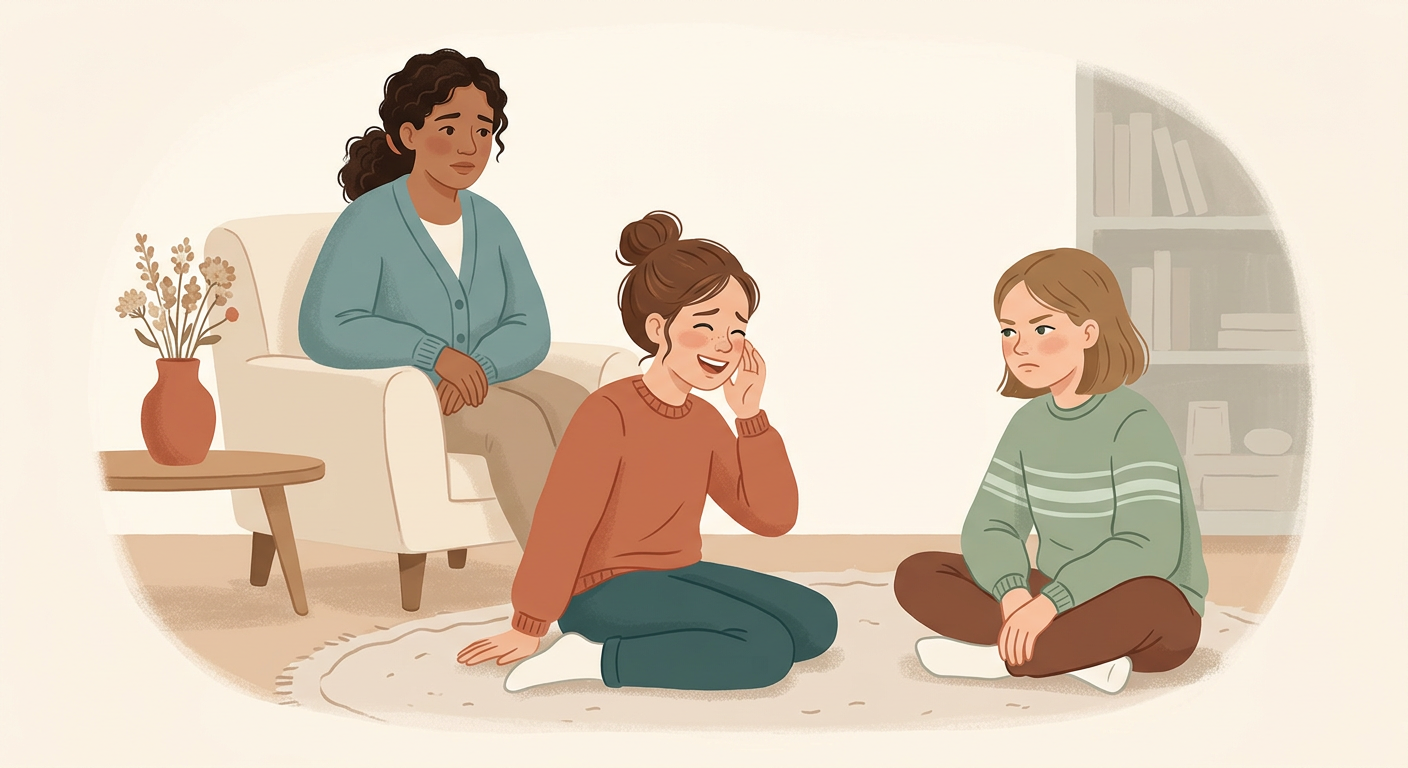
Your 11-year-old daughter brings a friend home who is quite rude to her in front of you. Your daughter laughs nervously. You...
This is just 1 of 100+ questions in the Parenting Test
Want to know your real style and get a full diagnosis? Takes 2 minutes, free.
Take the Parenting Test →Why this situation matters
Ver a tu hija en una situación donde una amiga la trata con rudeza puede ser desafiante. Como padre o madre, es natural querer proteger a tu hijo y asegurarte de que reciba el respeto que merece. Observar la dinámica entre ellos te da una ventana a cómo tu hija navega sus relaciones sociales y cómo se valora a sí misma en esos contextos.
La forma en que respondemos a estos momentos no solo influirá en la situación inmediata, sino que también enviará un mensaje poderoso a tu hija sobre lo que es aceptable en una amistad, sobre su propio valor y sobre cómo manejar conflictos. Tu intervención, o la falta de ella, puede afectar su autoestima y su capacidad para establecer límites saludables en el futuro. Es una oportunidad para guiarla en el desarrollo de habilidades sociales cruciales.
Pensar en cómo abordar esta situación te ayudará a reflexionar sobre tus propios instintos y a considerar distintas perspectivas en la crianza. ¿Estás listo para explorar qué enfoque es el más adecuado para fomentar la confianza y el buen juicio en tu hija?
The possible answers
These are the options you'll see in the test. Each one measures something different — we won't tell you which is best here (that's what the test is for 😉).
- AYou intervene: "We don't speak like that in this house."
- BLater, in private, you talk to your daughter about how she felt.
- CYou forbid her from seeing the friend again.
- DYou don't say anything; it's just 'girl stuff'.
What the experts say
Diana Baumrind
Developmental Psychologist, University of California, Berkeley
“The authoritative style fosters social competence and self-confidence by combining demandingness with responsiveness and support.”
Daniel Siegel
Clinical Neuropsychiatrist, UCLA
“Helping children narrate their experiences allows them to integrate their emotions and develop a more coherent and resilient mind.”
Mona O'Moore
Bullying Researcher, Trinity College Dublin
“Discussing problematic relationships helps young people develop coping strategies and resilience in the face of 'subtle' victimization.”
Devil's advocate
Common objection
But if I don't stop her at the moment, my daughter will think I approve, and the friend will think she can continue to be rude. It's cowardly to stay silent.
Why it falls short
Acting promptly doesn't always mean intervening in the moment. Immediacy can be disruptive. Addressing the situation privately protects your daughter's dignity and gives her space to process, better preparing her to stand up for herself in the future without unnecessary confrontation at that precise moment.
This is just 1 of 100+ questions in the Parenting Test
Want to know your real style and get a full diagnosis? Takes 2 minutes, free.
Take the Parenting Test →Related questions
Part of the Fami ecosystem
Sites made by families, for families. Start with the two most loved:
The task manager that coordinates your whole family — without the stress.
Visit →famiEduca.comA platform where children learn on their own, the fun way.
Visit →Worldwide guide of destinations and points of interest for family travel.
Restaurants where great food is also for the kids.
Challenges and games to rediscover the joy of playing together.
Easy recipes to cook with the little ones.
Films handpicked to watch as a family.
Reads for small big readers.