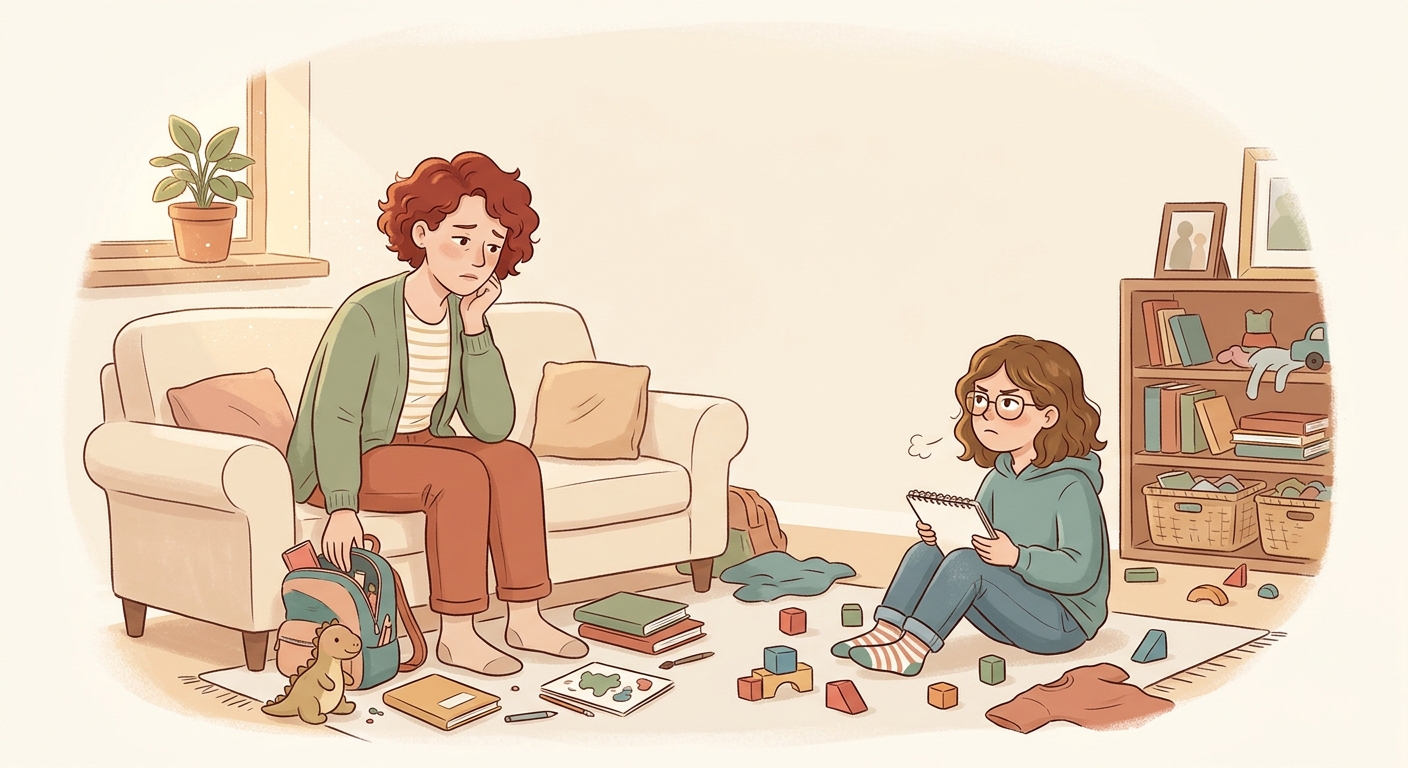
Your 9-year-old daughter NEVER tidies her room. You’ve had the conversation 50 times already.
This is just 1 of 100+ questions in the Parenting Test
Want to know your real style and get a full diagnosis? Takes 2 minutes, free.
Take the Parenting Test →Why this situation matters
Como padres, uno de los desafíos más comunes es lograr que nuestros hijos colaboren con las tareas del hogar, especialmente cuando se trata de mantener su propio espacio ordenado. Es frustrante repetir lo mismo una y otra vez, y es fácil caer en la desesperación o la ira cuando parece que nuestros mensajes no calan. La clave no está solo en lo que decimos, sino en cómo lo decimos y en las estrategias que implementamos para fomentar hábitos duraderos.
La resistencia a ordenar puede tener múltiples raíces. A veces, es una cuestión de desarrollo: los niños pequeños se distraen fácilmente o tienen dificultades para planificar y ejecutar tareas complejas. En la preadolescencia, puede ser una expresión de independencia o un reflejo de otras presiones. Lo importante es comprender que la forma en que reaccionamos y gestionamos estas situaciones puede influir enormemente en la autoestima de nuestros hijos, en su sentido de responsabilidad y en la dinámica familiar general.
Establecer rutinas claras, límites consistentes y consecuencias lógicas (no punitivas) es fundamental. Se trata de enseñarles habilidades para la vida y no solo de lograr que la habitación esté limpia. Tu respuesta en momentos como este modela cómo tu hija aprenderá a manejar la frustración y a tomar responsabilidad por sus acciones. Descubre cómo tu enfoque puede marcar la diferencia en este escenario.
The possible answers
These are the options you'll see in the test. One is the ideal answer according to experts; the others fall short for specific reasons. Tap yours to see why.
Tap the option you would choose
What the experts say
Mary Spagnola & Barbara Fiese
U. Illinois, family routines
Ross Greene
Harvard Medical School, 'The Explosive Child'
Devil's advocate
Common objection
She's 9, she should be able to do it by herself without me helping her.
Why it falls short
Executive functions (planning, maintaining attention on a boring task) don't fully mature until around age 20. Helping for 10 minutes isn't coddling; it's scaffolding what she can't yet do on her own.
This is just 1 of 100+ questions in the Parenting Test
Want to know your real style and get a full diagnosis? Takes 2 minutes, free.
Take the Parenting Test →Related questions
Bath time. They've been saying "I'm coming now" for 10 minutes without moving. You...
Elección con límites
You're 12 minutes late for school for the third time this week. The reason: your 5-year-old insisted on wearing the left sock on the right foot 'just because'. You…
Autonomía con estructura
You've given your 10-year-old three warnings to set the table. He's still playing. Dinner's ready. You...
Límites claros, consecuencias lógicas
It’s 7:14 in the morning. Your 18-month-old has been awake for 40 minutes, and you haven't even managed to open both eyes yet. He brings you a book. Again. You…
Apego seguro, Conexión temprana
Bedtime. Your 3-year-old asks for 'just one more story' for the fifth time.
Rutina = predictibilidad cálida, no rigidez.
Your 18-month-old won't sleep. They've been crying in the crib for 40 minutes. You...
Apoyo gradual, Límite suave
Part of the Fami ecosystem
Sites made by families, for families. Start with the two most loved:
The task manager that coordinates your whole family — without the stress.
Visit →famiEduca.comA platform where children learn on their own, the fun way.
Visit →Worldwide guide of destinations and points of interest for family travel.
Restaurants where great food is also for the kids.
Challenges and games to rediscover the joy of playing together.
Easy recipes to cook with the little ones.
Films handpicked to watch as a family.
Reads for small big readers.