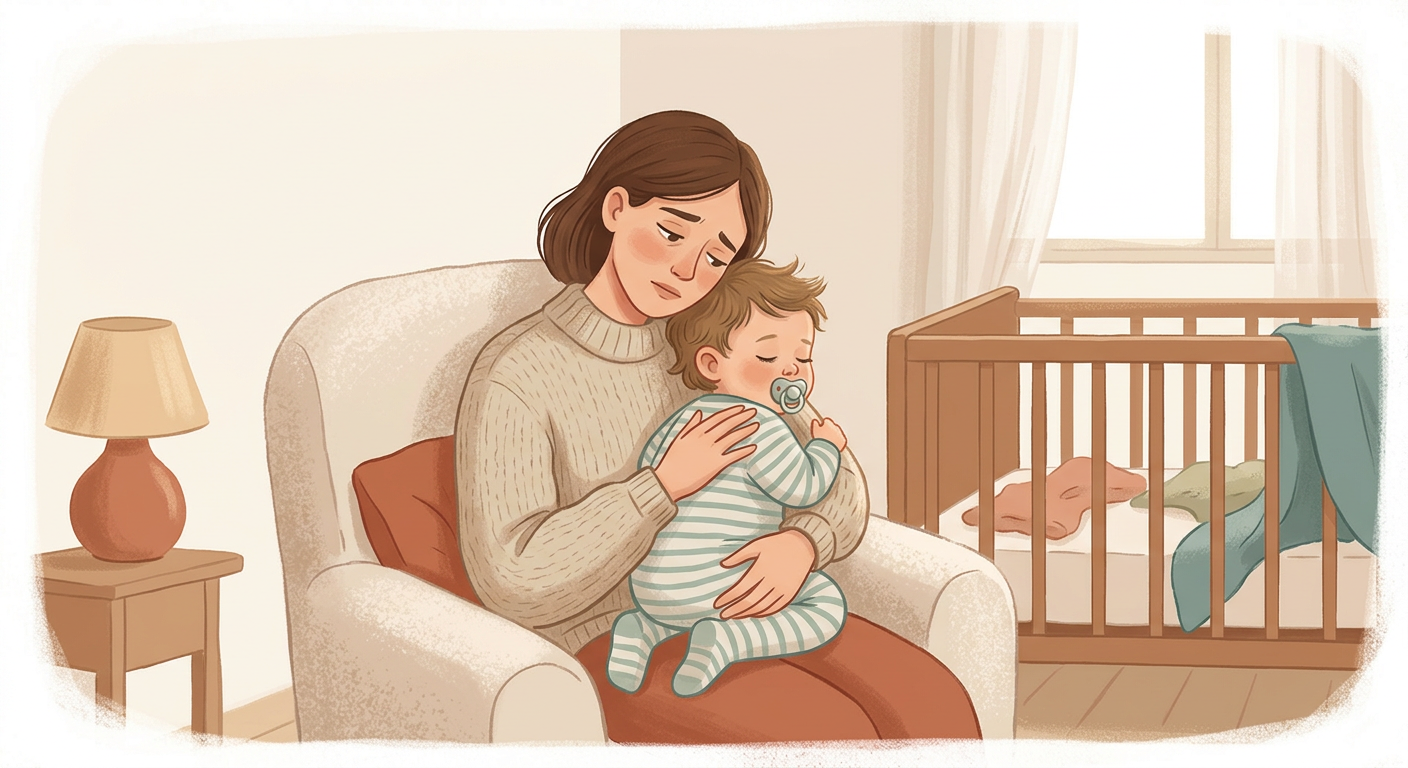
Your 18-month-old won't sleep. They've been crying in the crib for 40 minutes. You...
This is just 1 of 100+ questions in the Parenting Test
Want to know your real style and get a full diagnosis? Takes 2 minutes, free.
Take the Parenting Test →Why this situation matters
Lidiar con un bebé que no duerme y llora sin parar es una de las situaciones más desafiantes que enfrentan los padres. En esos momentos de la noche, el cansancio y la frustración pueden llevar a decisiones impulsivas, pero entender la importancia de una rutina de sueño sólida es clave para el bienestar de toda la familia. La forma en que respondemos a su llanto no solo afecta su capacidad para conciliar el sueño esa noche, sino que también influye en el desarrollo de sus hábitos de sueño a largo plazo y en la construcción de su sentido de seguridad y confianza.
Durante los primeros años, el cerebro de tu hijo está desarrollando patrones cruciales. La consistencia en el abordaje del sueño les ayuda a comprender el mundo que les rodea y a autorregularse. Cuando un bebé llora por la noche, nos está comunicando una necesidad. Nuestro desafío como padres es discernir esa necesidad y responder de una manera que promueva tanto su seguridad emocional como su autonomía en el sueño. Una respuesta bien pensada puede fortalecer el vínculo y establecer las bases para noches más tranquilas.
Es natural sentirse abrumado, pero recuerda que cada decisión que tomas en estos momentos forma parte del complejo rompecabezas de la crianza. Pensar en cómo tu reacción impacta en el desarrollo de tu pequeño puede ofrecer una nueva perspectiva. ¿Estás listo para explorar qué enfoque es el más adecuado para ti y tu familia en esta situación común pero desalentante?
The possible answers
These are the options you'll see in the test. Each one measures something different — we won't tell you which is best here (that's what the test is for 😉).
- AYou pick them up and they sleep with you
- BYou let them cry, 'they need to learn'
- CYou go in every few minutes to comfort them without taking them out
- DYou put the TV on nearby to distract them
What the experts say
Richard G. Mindell
PhD, Professor of Psychology
“Consistent and predictable responses to an infant's cues are crucial for their sense of security. Monitoring and gentle intervention in situations involving the development of self-reliance are more effective than neglect or over-intervention.”
Jay Belsky
PhD, Professor of Child Development
“The authoritative parenting style, which combines high expectations with high responsiveness, has been shown to be most consistent with positive child developmental outcomes, including autonomy and social competence.”
Daniel Siegel
MD, neuroscientist and psychiatrist
“Maintaining a calm and predictable presence helps the child's developing brain integrate and regulate their own emotions. It's the 'being with' that allows the child to learn to 'be alone'.”
Devil's advocate
Common objection
But isn't that 'giving in' a bit? If I go in every few minutes, the child will think that if they cry enough, I'll eventually come and let them sleep with me.
Why it falls short
It's not about giving in on the goal of them sleeping in their crib, but about offering support. The key is consistent action (going in, comforting, not taking them out), which teaches the child that you are there for them, but the boundary of the sleep location remains. You are not rewarding their crying with what they want (to sleep with you), but validating their emotion while maintaining the boundary. This is the basis of secure attachment, not manipulation.
This is just 1 of 100+ questions in the Parenting Test
Want to know your real style and get a full diagnosis? Takes 2 minutes, free.
Take the Parenting Test →Related questions
Bath time. They've been saying "I'm coming now" for 10 minutes without moving. You...
Elección con límites
You're 12 minutes late for school for the third time this week. The reason: your 5-year-old insisted on wearing the left sock on the right foot 'just because'. You…
Autonomía con estructura
You've given your 10-year-old three warnings to set the table. He's still playing. Dinner's ready. You...
Límites claros, consecuencias lógicas
It’s 7:14 in the morning. Your 18-month-old has been awake for 40 minutes, and you haven't even managed to open both eyes yet. He brings you a book. Again. You…
Apego seguro, Conexión temprana
Bedtime. Your 3-year-old asks for 'just one more story' for the fifth time.
Rutina = predictibilidad cálida, no rigidez.
Your 9-year-old daughter NEVER tidies her room. You’ve had the conversation 50 times already.
Rutina acompañada > orden repetida 50 veces.
Part of the Fami ecosystem
Sites made by families, for families. Start with the two most loved:
The task manager that coordinates your whole family — without the stress.
Visit →famiEduca.comA platform where children learn on their own, the fun way.
Visit →Worldwide guide of destinations and points of interest for family travel.
Restaurants where great food is also for the kids.
Challenges and games to rediscover the joy of playing together.
Easy recipes to cook with the little ones.
Films handpicked to watch as a family.
Reads for small big readers.