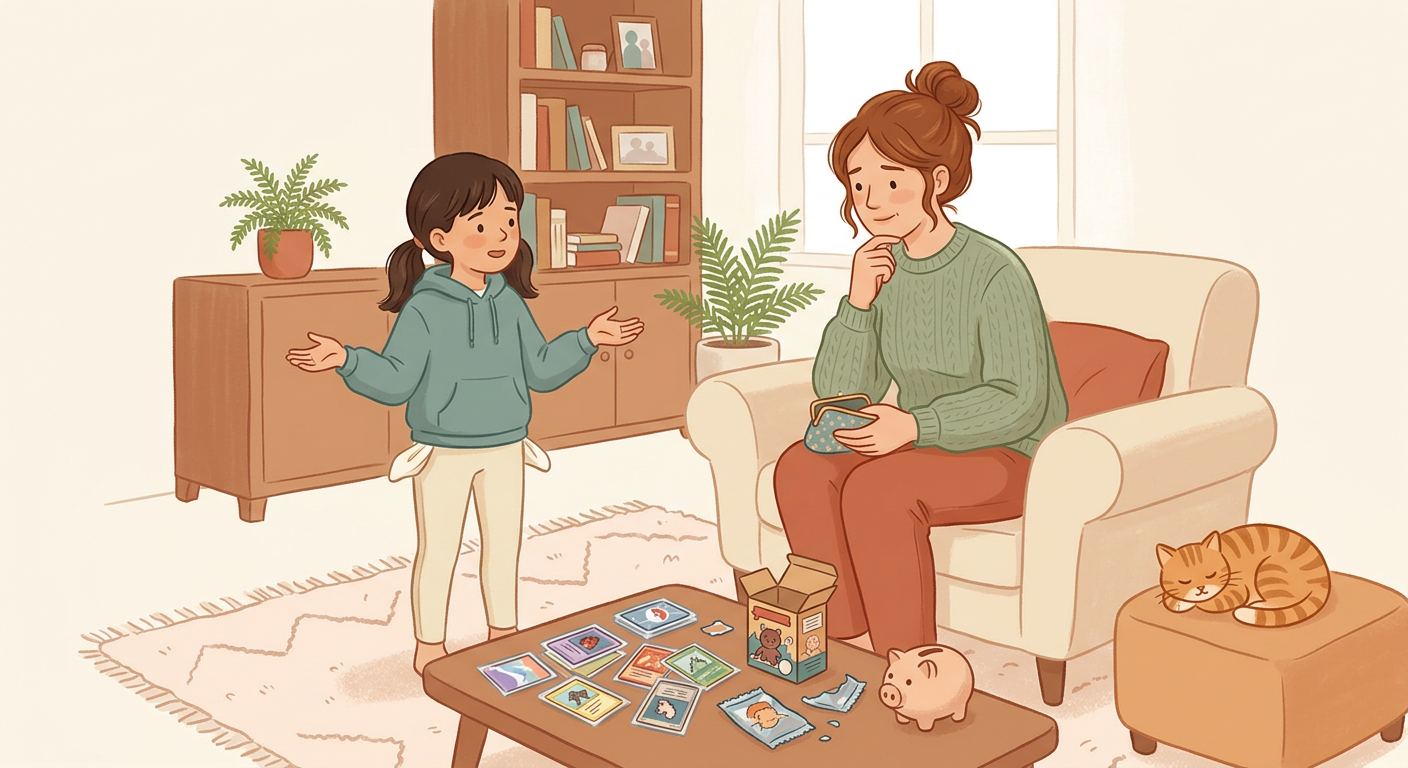
Your 10-year-old daughter spent her entire month's allowance on trading card packs in 3 days. Now she's asking for money to go to the cinema with friends. You...
This is just 1 of 100+ questions in the Parenting Test
Want to know your real style and get a full diagnosis? Takes 2 minutes, free.
Take the Parenting Test →Why this situation matters
Lidiar con la mesada de nuestros hijos es un desafío común, y situaciones como esta son oportunidades de oro para enseñarles lecciones valiosas sobre el dinero. A los 10 años, los niños están empezando a comprender el valor de las cosas y la importancia de la planificación financiera. Cómo respondemos en estos momentos puede moldear sus hábitos de gasto y su relación con el dinero durante años.
Es natural para los niños dejarse llevar por los impulsos, especialmente cuando se trata de algo que les apasiona. Nuestra reacción no debe ser solo sobre la consecuencia inmediata de no tener dinero, sino sobre la construcción de una base sólida para su independencia económica futura. Queremos que aprendan a gestionar sus recursos, a entender que las decisiones de hoy afectan las oportunidades de mañana, y a desarrollar la paciencia y la previsión.
Esta situación plantea un dilema: cómo equilibrar la empatía con la enseñanza de responsabilidad. ¿Ayudamos a nuestros hijos a salir del apuro o les permitimos experimentar las consecuencias de sus decisiones? Tu elección aquí revelará mucho sobre tu enfoque en la educación financiera de tus hijos. ¿Estás listo para explorar la mejor manera de guiarla?
The possible answers
Tap the option you would choose
What the experts say
Adrian Furnham
Professor of Psychology, University College London
“Effective economic socialization involves allowing children to make financial mistakes and experience their natural consequences.”
Laurence Steinberg
Professor of Psychology, Temple University
“Authoritative parenting, which combines high expectations and firmness with emotional support, is key to children's autonomy and competence.”
Alfie Kohn
Author and Educator
“Logical consequences, unlike punishments, are designed to help children learn from their mistakes without damaging their relationship with their parents.”
Devil's advocate
Common objection
But will leaving her high and dry for the cinema, when her friends are going, not make her feel excluded, or even make me feel like a bad parent?
Why it falls short
That's an understandable feeling. However, letting her go without facing consequences sends her a mixed message. The pain of missing out on the plan is a powerful lesson about the importance of managing her money, and won't make her feel 'abandoned', but responsible. You can validate her frustration without giving in.
This is just 1 of 100+ questions in the Parenting Test
Want to know your real style and get a full diagnosis? Takes 2 minutes, free.
Take the Parenting Test →Related questions
Part of the Fami ecosystem
Sites made by families, for families. Start with the two most loved:
The task manager that coordinates your whole family — without the stress.
Visit →famiEduca.comA platform where children learn on their own, the fun way.
Visit →Worldwide guide of destinations and points of interest for family travel.
Restaurants where great food is also for the kids.
Challenges and games to rediscover the joy of playing together.
Easy recipes to cook with the little ones.
Films handpicked to watch as a family.
Reads for small big readers.