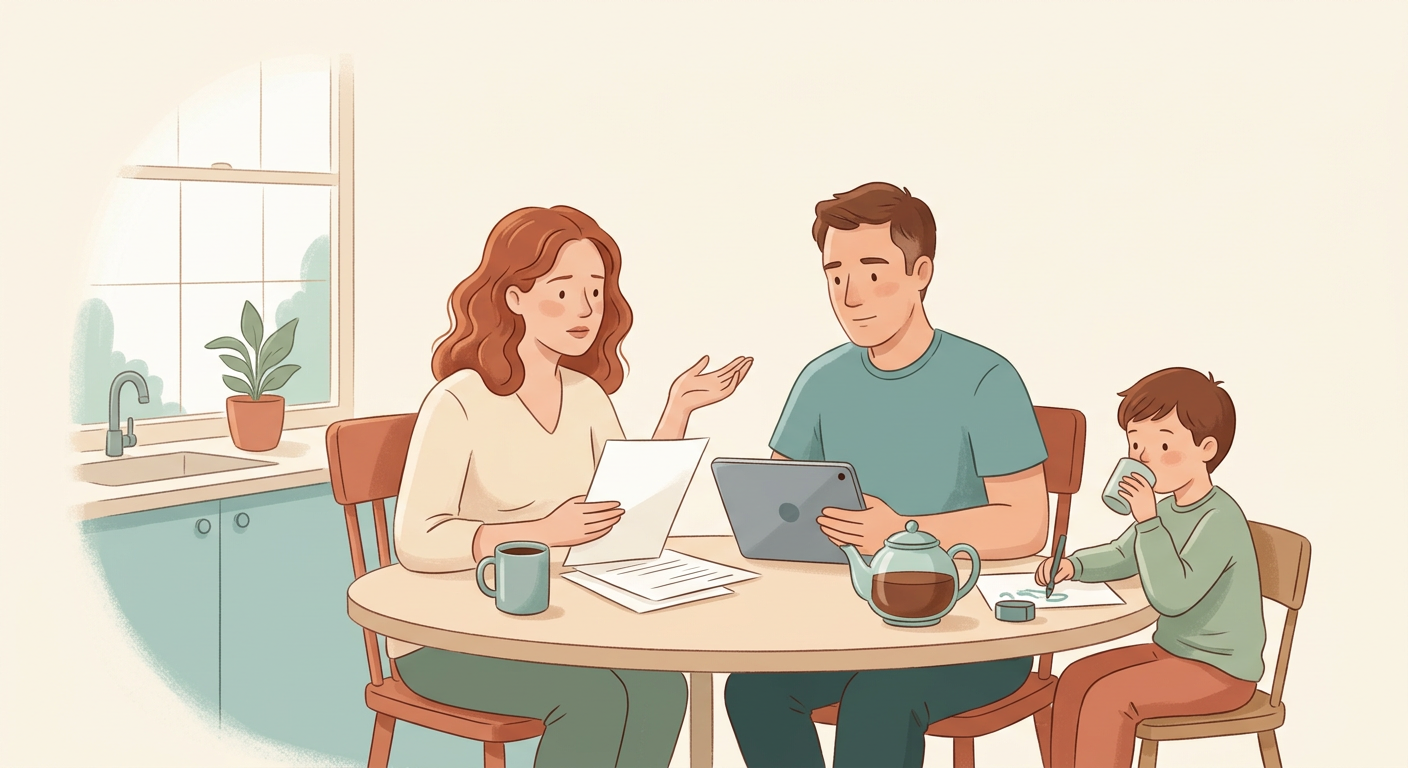
You want to make a big purchase (a car, a trip, home renovations) but can't agree on the budget. You...
This is just 1 of 100+ questions in the Couple Test
See how you two work together, based on Gottman's research. Free, 3 minutes.
Take the Couple Test →Why this situation matters
Money disagreements are one of the most common sources of conflict in relationships. When big purchases are on the horizon, these disagreements can escalate quickly, turning exciting plans into stressful battlegrounds. Successfully navigating these financial conversations is crucial for maintaining harmony and ensuring both partners feel heard and respected.
Over time, unresolved financial tension can erode trust and create resentment. It's not just about the money itself, but what it represents: security, freedom, future plans, and individual values. How you approach these moments of financial friction can either strengthen your bond through compromise and understanding, or push you further apart.
Learning to manage these situations effectively is a key skill for any couple looking for long-term satisfaction. It helps build a foundation of mutual respect and shared decision-making, which extends far beyond financial matters. Reflecting on your typical responses to these challenges offers valuable insight into your relationship's health and communication patterns. Take the full test to understand your typical patterns when money clashes arise.
The possible answers
Tap the option you would choose
What the experts say
John Gottman
Investigador de relaciones, cofundador del Instituto Gottman
“La clave no es eliminar los conflictos, sino cómo los gestionamos.”
Sue Johnson
Creadora de la Terapia Centrada en las Emociones (EFT)
“La seguridad en la relación surge de saber que tu pareja estará ahí para ti, especialmente en momentos de conflicto.”
Stan Tatkin
Fundador del Psychobiological Approach to Couple Therapy (PACT)
“Las parejas deben operar como un sistema de dos personas en todo momento, nunca como dos individuos separados, especialmente en decisiones importantes.”
Devil's advocate
Common objection
Pero siempre es mi pareja quien cede, yo no quiero ser el único 'razonable'. Al final, siempre tengo que transigir yo.
Why it falls short
Si uno siente que siempre cede, es un indicador de que las negociaciones no están siendo mutuamente satisfactorias. La opción ideal implica que AMBOS busquen una solución tolerable, no que uno arrastre el pie. Si no se logra, la negociación necesita otra ronda, no el resentimiento.
This is just 1 of 100+ questions in the Couple Test
See how you two work together, based on Gottman's research. Free, 3 minutes.
Take the Couple Test →Related questions
You've been doing almost everything around the house for weeks while your partner has been "swamped." You...
Comunicar sin reprochar
You find out your partner has significant debts they hadn't told you about. You...
Transparencia, plan conjunto
You earn significantly more than your partner and notice tension every time you pay. You...
Diálogo claro, Pacto equitativo
Your partner earns significantly more than you and starts making financial decisions without consulting you. You...
Comunicación, Equidad, Negociación
Your partner made a significant purchase without telling you. You…
Comunicación clara, Reparación proactiva
Part of the Fami ecosystem
Sites made by families, for families. Start with the two most loved:
The task manager that coordinates your whole family — without the stress.
Visit →famiEduca.comA platform where children learn on their own, the fun way.
Visit →Worldwide guide of destinations and points of interest for family travel.
Restaurants where great food is also for the kids.
Challenges and games to rediscover the joy of playing together.
Easy recipes to cook with the little ones.
Films handpicked to watch as a family.
Reads for small big readers.