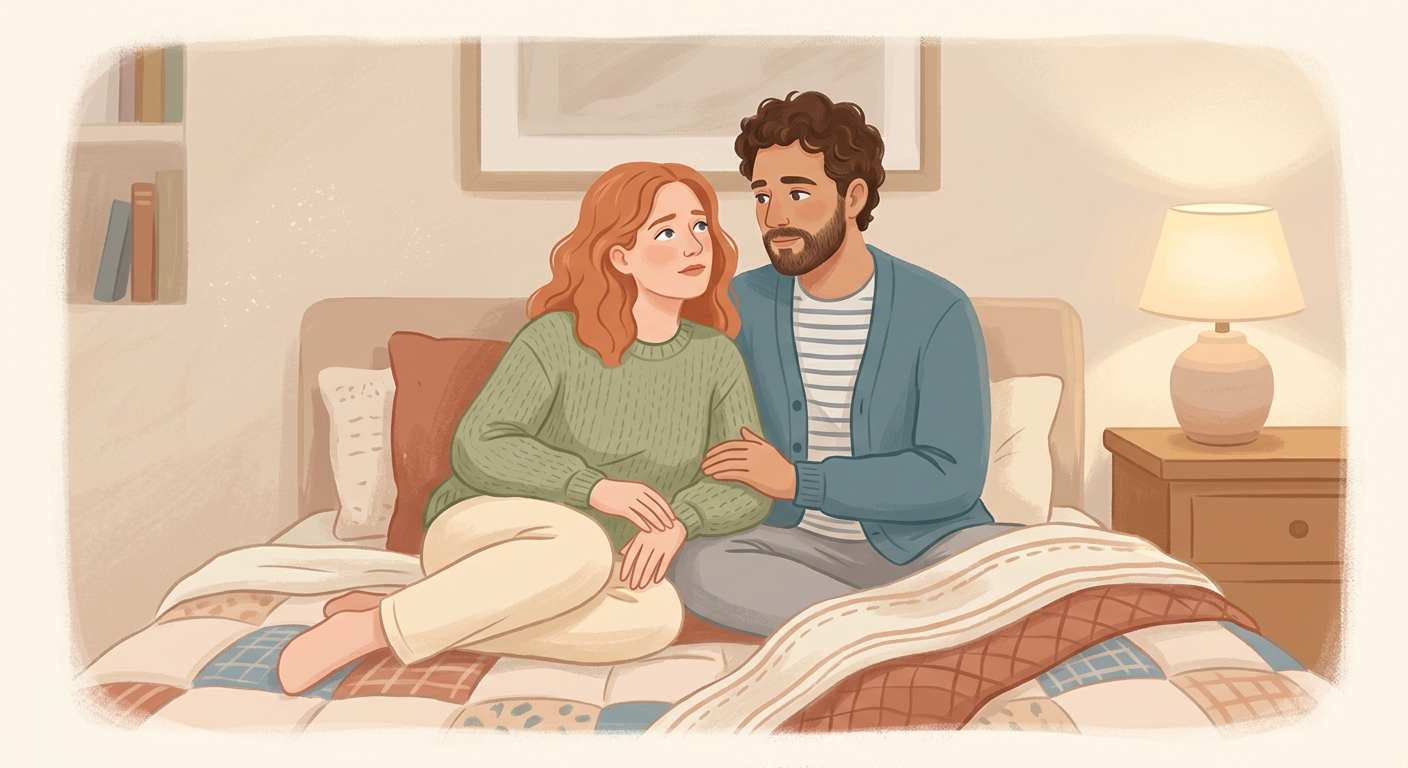
Your partner has much more (or much less) desire than you. You...
This is just 1 of 100+ questions in the Couple Test
See how you two work together, based on Gottman's research. Free, 3 minutes.
Take the Couple Test →Why this situation matters
It's common for couples to experience differences in sexual desire over time. Life stages, stress, health, and personal experiences all play a role in how much or how little we feel like being intimate. When these differences arise, they can create a silent tension that, if left unaddressed, can slowly erode the emotional and physical closeness you share.
Navigating these discrepancies sensitively is crucial. It's not about one person being 'right' and the other 'wrong,' but about understanding each other's needs and finding common ground. How you approach these conversations and actions can either strengthen your bond through empathy and shared solutions or drive a wedge between you, leading to feelings of rejection, resentment, or obligation.
Ignoring the issue or handling it poorly can lead to a significant decline in overall relationship satisfaction, impacting communication and connection in other areas of your life together. Healthy couples learn to address these vulnerable topics with care and mutual respect to maintain intimacy. Discover how your current approach might be affecting your relationship.
The possible answers
Tap the option you would choose
What the experts say
Emily Nagoski
Sex educator and author
“The human sexual response is complex and non-linear. Talking about what excites and blocks us is key.”
Sue Johnson
Creator of Emotionally Focused Therapy
“Emotional safety is the bed in which good couple sexuality flourishes.”
Devil's advocate
Common objection
But talking about sex is uncomfortable and can generate even more conflict or hurt feelings if one of us feels rejected.
Why it falls short
While it can be uncomfortable initially, avoiding dialogue causes more long-term harm than honest conversation. The key is in the approach: with curiosity, not blame, seeking mutual understanding rather than confrontation, as the Gottmans advocate.
This is just 1 of 100+ questions in the Couple Test
See how you two work together, based on Gottman's research. Free, 3 minutes.
Take the Couple Test →Related questions
Your partner asks to explore a new sexual fantasy that makes you uncomfortable. You...
Negociar intimidad, Validar límites
After having a baby, your desire levels are at very different paces. You...
Comprensión mutua, paciencia
Your sex life has been almost non-existent for months and neither of you mentions it. You...
Comunicar con deseo
You haven't had sex for weeks and you notice a distance growing between you. You...
Humor, conexión, intimidad
Part of the Fami ecosystem
Sites made by families, for families. Start with the two most loved:
The task manager that coordinates your whole family — without the stress.
Visit →famiEduca.comA platform where children learn on their own, the fun way.
Visit →Worldwide guide of destinations and points of interest for family travel.
Restaurants where great food is also for the kids.
Challenges and games to rediscover the joy of playing together.
Easy recipes to cook with the little ones.
Films handpicked to watch as a family.
Reads for small big readers.