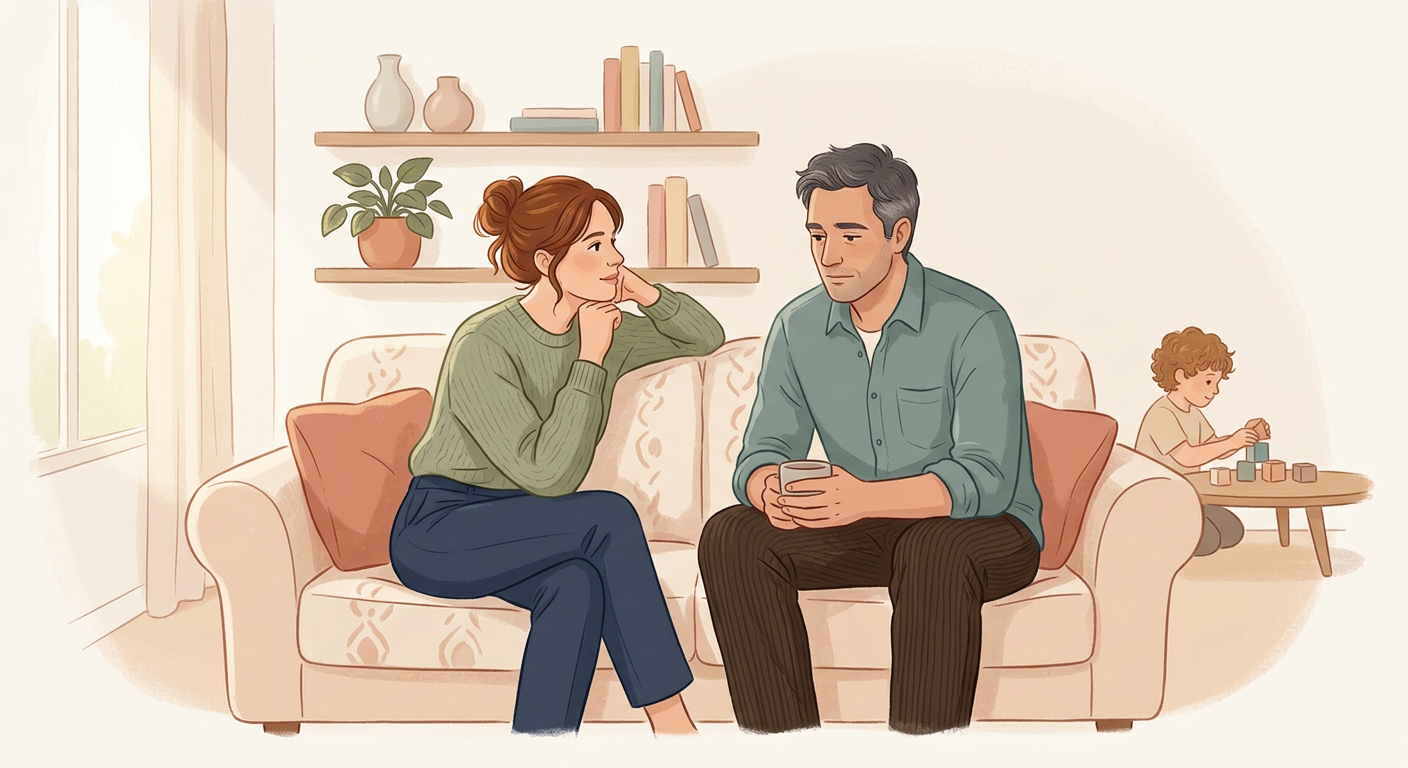
A heated argument in the kitchen. You've said something you know hurt them. Five minutes pass. You...
This is just 1 of 100+ questions in the Couple Test
See how you two work together, based on Gottman's research. Free, 3 minutes.
Take the Couple Test →Why this situation matters
En el fragor de una discusión, es fácil decir cosas de las que luego nos arrepentimos. Las palabras, una vez pronunciadas, no pueden retractarse, pero sí podemos influir en cómo se asienta el polvo después de la tormenta. La forma en que manejamos esos momentos post-conflicto es tan crucial como la forma en que gestionamos el conflicto en sí mismo. A menudo, después de un comentario hiriente, hay una tensión palpable en el ambiente que puede prolongarse si no se aborda adecuadamente.
La psicología de las relaciones subraya que la reparación es una piedra angular para la resiliencia de la pareja. Ignorar el dolor causado o esperar que el otro inicie la reconciliación puede erosionar la confianza y la seguridad emocional con el tiempo. El cerebro humano está programado para recordar las experiencias negativas con más intensidad, lo que significa que un comentario dañino puede dejar una huella más profunda de lo esperado.
Comprender cómo tus acciones post-argumento afectan a tu pareja y a la dinámica de vuestra relación es fundamental para construir una conexión más fuerte y saludable a largo plazo. Tu reacción en esos minutos decisivos puede marcar la diferencia entre un bache temporal y una cicatriz permanente. Es importante evaluar honestamente cómo sueles actuar. Descubre qué tan efectiva es tu estrategia.
The possible answers
Tap the option you would choose
What the experts say
John Gottman
Relationship researcher, co-founder The Gottman Institute
“Repair attempts are the secret weapon of emotionally intelligent couples.”
Sue Johnson
Psychologist, creator of EFT
“Ignoring or avoiding moments of pain creates insecurity and threatens attachment.”
Devil's advocate
Common objection
But what if I'm right and apologizing makes me seem weak or gives the other person a win?
Why it falls short
An apology doesn't imply you take all the responsibility, but rather acknowledges the impact of your words. It's an act of strength that prioritizes the connection and well-being of the relationship over the need to 'win' or have the last word, as Terry Real points out.
This is just 1 of 100+ questions in the Couple Test
See how you two work together, based on Gottman's research. Free, 3 minutes.
Take the Couple Test →Related questions
During arguments, your partner raises their voice and you freeze up and shut down. You...
Pausa y reconexión
You get some good professional news and tell your partner. Your partner reacts lukewarmly. You…
Pedir, celebrar, conectar
You find it hard to ask for what you need and then get upset when your partner doesn't guess it. You...
Pedir sin adivinar
You arrive home tired, and your partner immediately starts telling you about their day's problems as soon as you walk through the door. You…
Límites claros, escucha atenta
Your partner says to you: "You never help with the house." You...
Validar y solucionar
Part of the Fami ecosystem
Sites made by families, for families. Start with the two most loved:
The task manager that coordinates your whole family — without the stress.
Visit →famiEduca.comA platform where children learn on their own, the fun way.
Visit →Worldwide guide of destinations and points of interest for family travel.
Restaurants where great food is also for the kids.
Challenges and games to rediscover the joy of playing together.
Easy recipes to cook with the little ones.
Films handpicked to watch as a family.
Reads for small big readers.