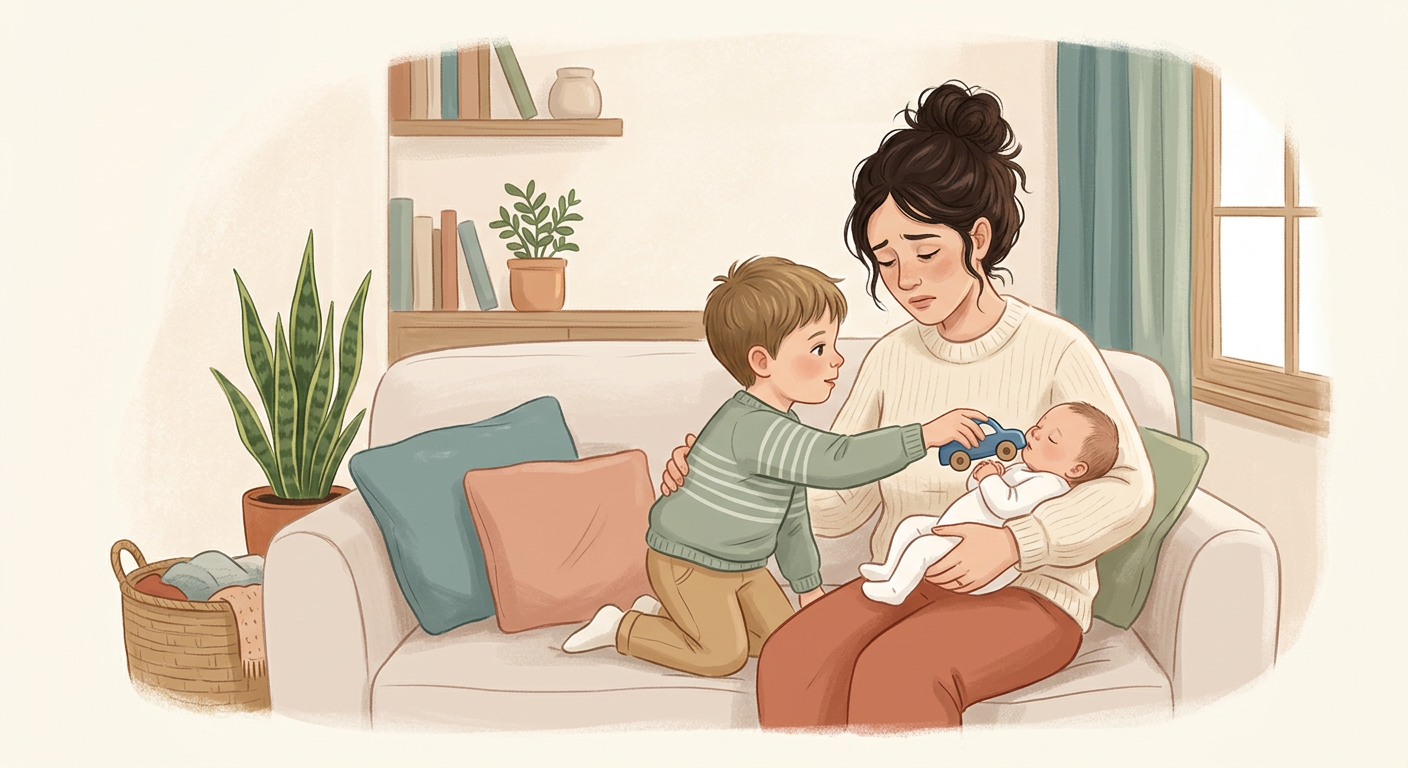
You've just had your second child. Your older child (5) brings a toy car to the baby… and squashes it against their face. "I wanted them to play." You...
This is just 1 of 100+ questions in the Parenting Test
Want to know your real style and get a full diagnosis? Takes 2 minutes, free.
Take the Parenting Test →Why this situation matters
La llegada de un nuevo bebé a la familia es un momento de alegría, pero también puede ser un desafío para los hermanos mayores. Es completamente normal que surjan celos y que los niños expresen sus emociones de formas que pueden parecernos problemáticas, como en la situación que acabas de leer. Su comportamiento no suele ser malintencionado, sino una búsqueda de atención o una manera de procesar los grandes cambios en su vida.
Es fundamental entender que la forma en que reaccionamos a estos incidentes sienta las bases de la relación entre hermanos y de cómo tu hijo mayor aprenderá a gestionar emociones complejas. Una respuesta adecuada puede fomentar la empatía, la responsabilidad y un vínculo positivo entre ellos, mientras que una reacción impulsiva podría generar resentimiento o confusión en el niño.
Nuestras interacciones iniciales son cruciales para guiar a tu hijo a través de esta transición, ayudándole a sentirse seguro y amado, a la vez que aprende los límites necesarios para la seguridad del bebé. ¿Estás listo para descubrir cómo manejar esta delicada situación y fortalecer los lazos familiares?
The possible answers
Tap the option you would choose
What the experts say
Adele Faber
Co-author of 'Siblings Without Rivalry'
“Helping children deal with their feelings is the first step to problem-solving.”
John Bowlby
Psychoanalyst and father of Attachment Theory
“The human need to form attachments is innate.”
Alan Sroufe
Pioneer in child attachment research
“The quality of early attachment predicts later social competence.”
Devil's advocate
Common objection
Isn't it risky to give a 5-year-old real tasks with a newborn baby? What if they make another mistake and genuinely hurt the baby?
Why it falls short
Of course, supervision is fundamental. 'Involving with real tasks' doesn't mean leaving them alone, but actively guiding them. It's a supervised learning opportunity for them to develop the confidence and competence they need for their new role.
This is just 1 of 100+ questions in the Parenting Test
Want to know your real style and get a full diagnosis? Takes 2 minutes, free.
Take the Parenting Test →Related questions
Your older child (12) tells you privately: "You're always softer with my sister." They have a point. You...
Validar y preguntar
Your kids (9 and 11) are fighting over the remote for the umpteenth time. You…
Límites lógicos, Autonomía
Your two children (8 and 10) are yelling at each other over who gets the TV remote.
Retira el premio; delega la solución.
Part of the Fami ecosystem
Sites made by families, for families. Start with the two most loved:
The task manager that coordinates your whole family — without the stress.
Visit →famiEduca.comA platform where children learn on their own, the fun way.
Visit →Worldwide guide of destinations and points of interest for family travel.
Restaurants where great food is also for the kids.
Challenges and games to rediscover the joy of playing together.
Easy recipes to cook with the little ones.
Films handpicked to watch as a family.
Reads for small big readers.