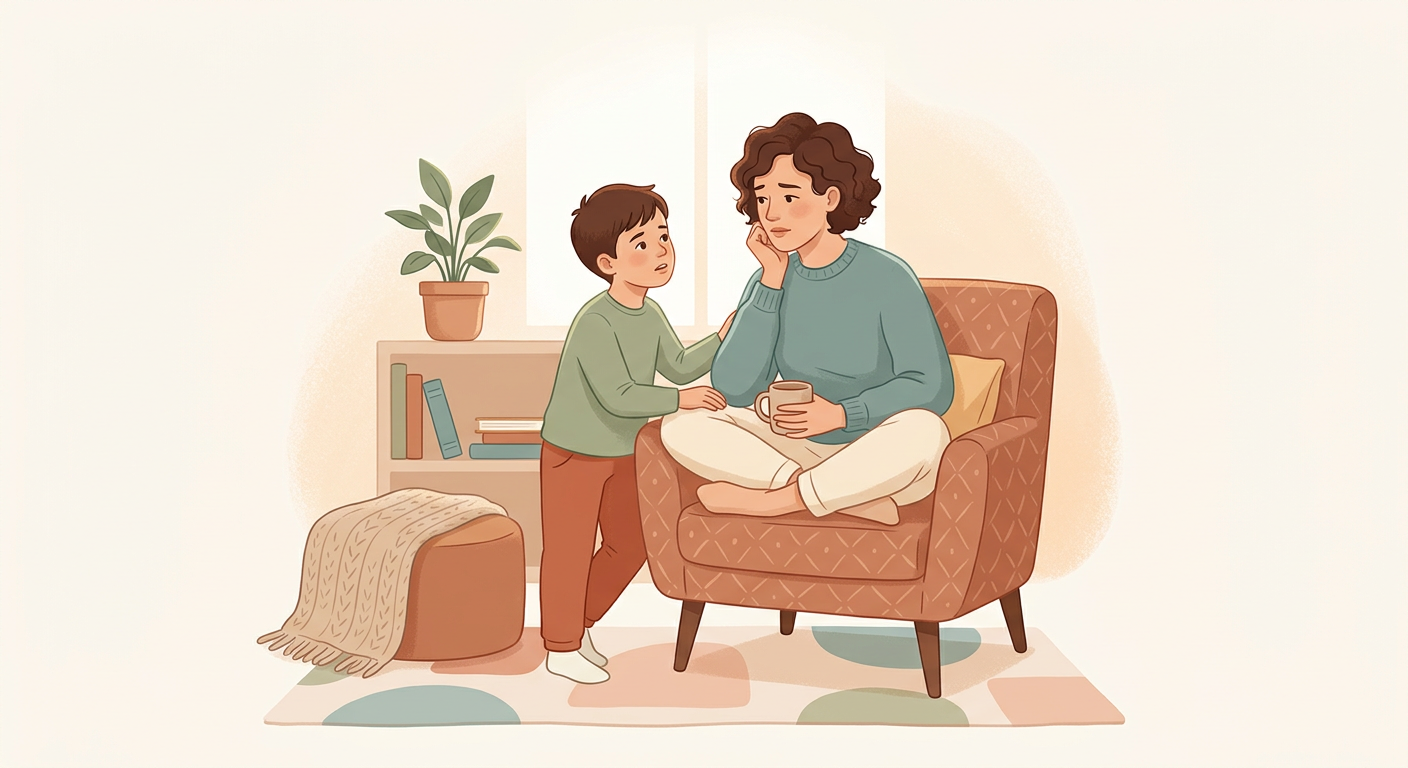
Your older child (12) tells you privately: "You're always softer with my sister." They have a point. You...
This is just 1 of 100+ questions in the Parenting Test
Want to know your real style and get a full diagnosis? Takes 2 minutes, free.
Take the Parenting Test →Why this situation matters
La dinámica entre hermanos es un terreno complejo que los padres navegan constantemente. Cuando un hijo mayor expresa sentirse tratado de manera menos favorable que su hermana, es una señal de que percibe una injusticia o un desequilibrio en el trato recibido.
Estas percepciones, aunque a veces no reflejen completamente la intención de los padres, son muy reales para el niño y pueden impactar profundamente su autoestima y su relación tanto con los padres como con su hermano/a. Ignorar o invalidar estos sentimientos puede erosionar la confianza y hacer que el niño se sienta incomprendido o menos valorado.
Comprender cómo abordar estas situaciones no solo ayuda a validar los sentimientos de tu hijo, sino que también fomenta un ambiente familiar de apertura y respeto mutuo. Tu respuesta puede sentar un precedente sobre cómo se manejan las diferencias y las quejas en casa. Descubre cómo tu reacción en este momento clave puede influir en el bienestar de tu familia.
The possible answers
Tap the option you would choose
What the experts say
Haim Ginott
Child psychologist
“The key to good communication with children is to respect them, to listen to their feelings and to respond to them as if they were true, because for them, they are.”
Alfred Adler
Psychoanalyst
“Children misbehave because they feel discouraged or because their need for belonging has not been met. Often, a complaint about favoritism is a sign that they are looking for their place.”
Daniel Siegel
Neuropsychiatrist
“Validating a child's feelings doesn't mean agreeing with their behavior, but acknowledging their internal experience. This is fundamental for regulating their emotions and strengthening their resilience.”
Devil's advocate
Common objection
Isn't that a bit naive? If I ask for examples, all I'll achieve is giving them ideas to try and justify their tantrum and always feel they're right.
Why it falls short
On the contrary, giving them space to express their point of view teaches critical thinking and problem-solving. It's not about always agreeing with them, but about listening and processing information together, distinguishing emotion from fact.
This is just 1 of 100+ questions in the Parenting Test
Want to know your real style and get a full diagnosis? Takes 2 minutes, free.
Take the Parenting Test →Related questions
Your kids (9 and 11) are fighting over the remote for the umpteenth time. You…
Límites lógicos, Autonomía
Your two children (8 and 10) are yelling at each other over who gets the TV remote.
Retira el premio; delega la solución.
You've just had your second child. Your older child (5) brings a toy car to the baby… and squashes it against their face. "I wanted them to play." You...
Implicación empática y responsabilidad
Part of the Fami ecosystem
Sites made by families, for families. Start with the two most loved:
The task manager that coordinates your whole family — without the stress.
Visit →famiEduca.comA platform where children learn on their own, the fun way.
Visit →Worldwide guide of destinations and points of interest for family travel.
Restaurants where great food is also for the kids.
Challenges and games to rediscover the joy of playing together.
Easy recipes to cook with the little ones.
Films handpicked to watch as a family.
Reads for small big readers.