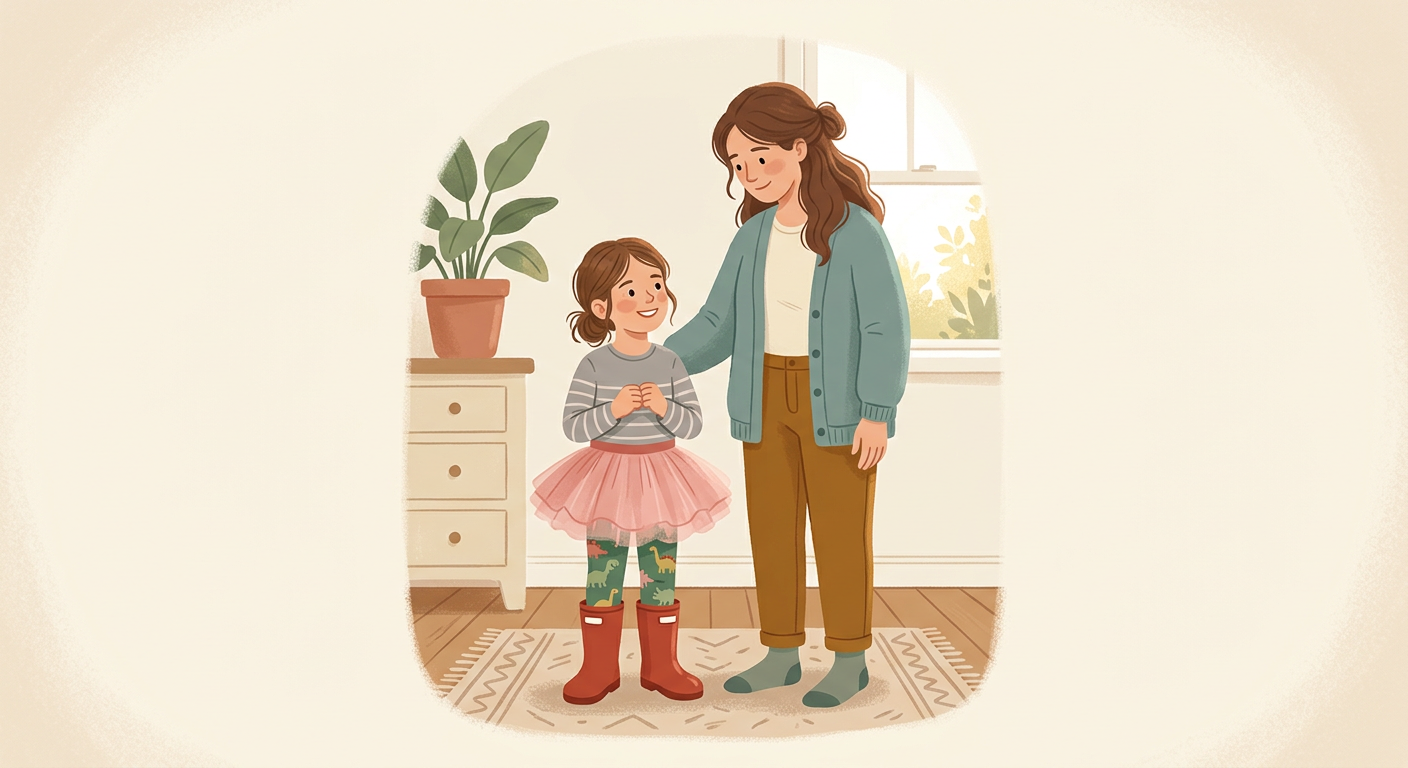
Your 6-year-old daughter wants to dress herself for a birthday party. The result: a pink tutu, dinosaur leggings, and Wellington boots. It's sunny outside. You...
This is just 1 of 100+ questions in the Parenting Test
Want to know your real style and get a full diagnosis? Takes 2 minutes, free.
Take the Parenting Test →Why this situation matters
La autonomía es un pilar fundamental en el desarrollo de nuestros hijos. A medida que crecen, empiezan a formar su propia identidad, y algo tan simple como elegir su ropa se convierte en una poderosa expresión de su individualidad. Permitirles tomar estas pequeñas decisiones les enseña a confiar en su juicio, a explorar su creatividad y a sentir que tienen control sobre su pequeño mundo.
Sin embargo, a veces sus elecciones pueden desafiar nuestras propias expectativas o incluso la lógica adulta. Es en estos momentos cuando nuestro rol como padres se pone a prueba: ¿priorizamos su autoexpresión y el desarrollo de su independencia, o intervenimos para asegurar que encajen en lo que consideramos 'apropiado' o 'práctico'? La forma en que respondemos a estas situaciones tiene un impacto duradero en su autoestima y en la relación de confianza que construimos con ellos.
La psicología del desarrollo nos dice que fomentar la autonomía en la infancia temprana es clave para que los niños se conviertan en adultos seguros y capaces de tomar decisiones informadas en el futuro. ¿Cómo manejarías esta situación para equilibrar su deseo de independencia con tu guía como padre? Descúbrelo en nuestro test.
The possible answers
Tap the option you would choose
What the experts say
Richard Ryan
Psychologist, co-creator of Self-Determination Theory
“Autonomy is not independence from others, but rather the feeling of choosing our own actions with meaning and purpose.”
Alfie Kohn
Educator and author
“Children don't need to be 'made' to do the right thing. They need to feel capable and respected.”
Diana Baumrind
Developmental psychologist
“Authoritative parents set limits but are responsive to their children's needs and encourage two-way communication.”
Devil's advocate
Common objection
But what if she always wants to dress like that? Am I not teaching her that it's okay to dress inappropriately for the occasion or weather?
Why it falls short
A single clothing choice, as long as it's safe, doesn't establish a pattern of 'inappropriateness.' It teaches her that her tastes are valid and that her parents trust her judgment, laying the groundwork for future conversations about appropriateness and social context.
This is just 1 of 100+ questions in the Parenting Test
Want to know your real style and get a full diagnosis? Takes 2 minutes, free.
Take the Parenting Test →Related questions
Your 10-year-old wants to walk to school alone (a 15-minute walk, crossing a main road).
Andamiaje gradual > burbuja o abandono.
Your teenager wants to quit a sport they've been doing for six years. You...
Autonomía con apoyo
Your 5-year-old daughter wants to put her shoes on herself. It takes her 10 minutes. You're running late.
Autonomía con marco temporal, no autonomía absoluta.
Your 10-year-old wants to go to the park alone. It's about 200 yards away, down a quiet street. You...
Autonomía con estructura
Your 16-year-old daughter wants to go Interrailing with two friends over the summer. Three countries, 15 days.
Autonomía 16+ = planificación conjunta, no prohibición.
Part of the Fami ecosystem
Sites made by families, for families. Start with the two most loved:
The task manager that coordinates your whole family — without the stress.
Visit →famiEduca.comA platform where children learn on their own, the fun way.
Visit →Worldwide guide of destinations and points of interest for family travel.
Restaurants where great food is also for the kids.
Challenges and games to rediscover the joy of playing together.
Easy recipes to cook with the little ones.
Films handpicked to watch as a family.
Reads for small big readers.