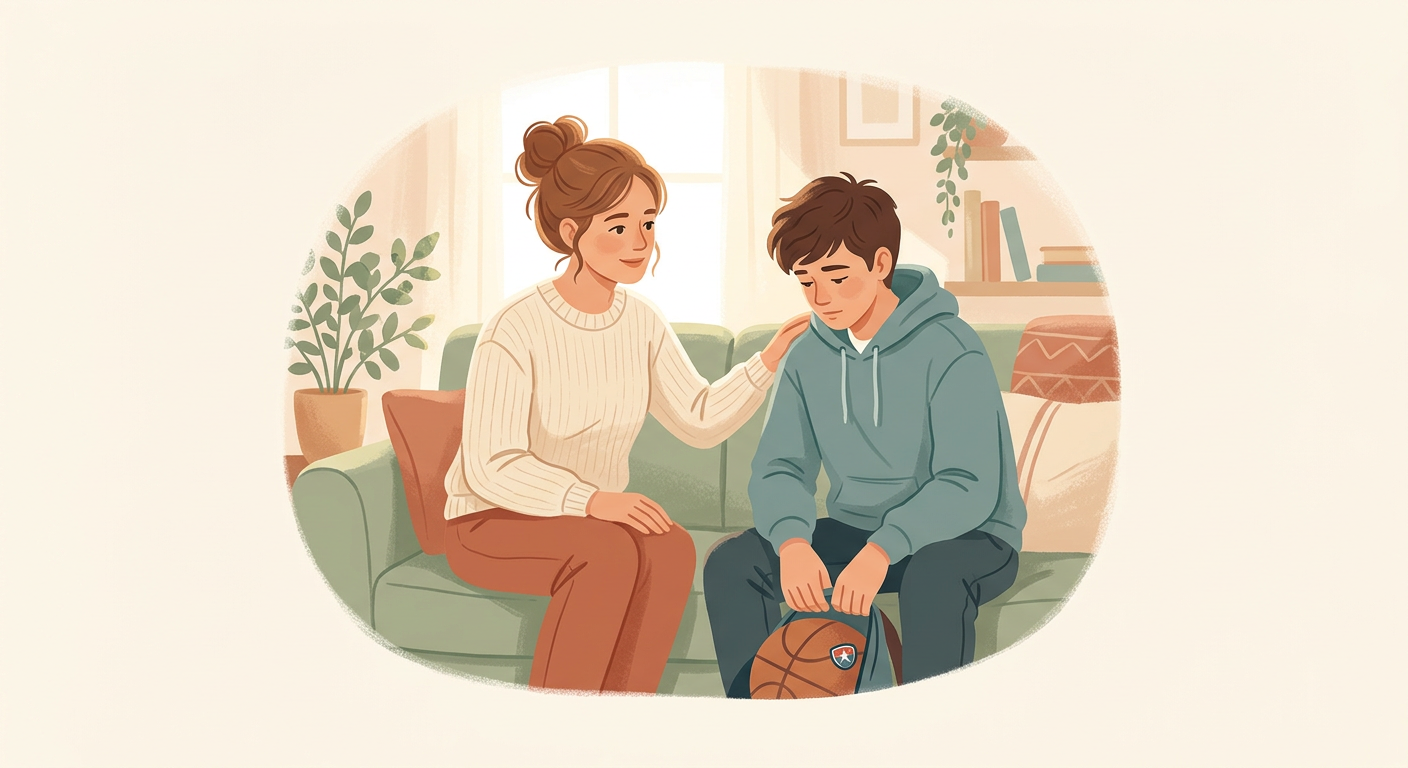
Your teenager wants to quit a sport they've been doing for six years. You...
This is just 1 of 100+ questions in the Parenting Test
Want to know your real style and get a full diagnosis? Takes 2 minutes, free.
Take the Parenting Test →Why this situation matters
Es un momento complicado cuando tu hijo, que ha dedicado años a una actividad, de repente expresa su deseo de abandonarla. Como padres, es natural que sintamos una mezcla de emociones: quizás decepción por el esfuerzo invertido, preocupación por si está tomando una decisión precipitada, o incluso la esperanza de que siga desarrollando sus talentos.
Esta situación es una oportunidad crucial para fomentar la autonomía de tu hijo y apoyar su desarrollo en un período tan importante como la adolescencia. La forma en que manejes este dilema puede tener un impacto significativo en cómo aprende a tomar decisiones, a expresar sus necesidades y a gestionar los compromisos a largo plazo. Es fundamental considerar no solo la actividad en sí, sino lo que esta decisión significa para él y para su sentido de identidad.
Reflexionar sobre este tipo de escenarios te ayuda a entender mejor los pilares de la crianza consciente y a fortalecer la relación con tu hijo, guiándolo hacia una mayor independencia y confianza. ¿Estás listo para explorar cómo tu respuesta puede influir en su crecimiento?
The possible answers
Tap the option you would choose
What the experts say
Richard Ryan
Co-founder, Self-Determination Theory (SDT)
“Autonomy is not total independence, but the experience of being the origin of one's own actions.”
Laurence Steinberg
Professor of Psychology, Temple University
“Good parental scaffolding involves supporting individuation without abandoning involvement.”
Daniel Siegel
Clinical Professor of Psychiatry, UCLA
“Validating the adolescent's internal experience is crucial for their brain development.”
Devil's advocate
Common objection
What if they quit purely out of whim or laziness? If I give them free rein, they'll do whatever they want without effort.
Why it falls short
Exploring 'why' doesn't mean passively accepting every decision. It involves accompanying them through the process, perhaps helping them identify whether it's a passing difficulty or a genuine change of interests. The goal is reflection, not unearned surrender.
This is just 1 of 100+ questions in the Parenting Test
Want to know your real style and get a full diagnosis? Takes 2 minutes, free.
Take the Parenting Test →Related questions
Your 10-year-old wants to walk to school alone (a 15-minute walk, crossing a main road).
Andamiaje gradual > burbuja o abandono.
Your 6-year-old daughter wants to dress herself for a birthday party. The result: a pink tutu, dinosaur leggings, and Wellington boots. It's sunny outside. You...
Autonomía, Autoexpresión, Validación
Your 5-year-old daughter wants to put her shoes on herself. It takes her 10 minutes. You're running late.
Autonomía con marco temporal, no autonomía absoluta.
Your 10-year-old wants to go to the park alone. It's about 200 yards away, down a quiet street. You...
Autonomía con estructura
Your 16-year-old daughter wants to go Interrailing with two friends over the summer. Three countries, 15 days.
Autonomía 16+ = planificación conjunta, no prohibición.
Part of the Fami ecosystem
Sites made by families, for families. Start with the two most loved:
The task manager that coordinates your whole family — without the stress.
Visit →famiEduca.comA platform where children learn on their own, the fun way.
Visit →Worldwide guide of destinations and points of interest for family travel.
Restaurants where great food is also for the kids.
Challenges and games to rediscover the joy of playing together.
Easy recipes to cook with the little ones.
Films handpicked to watch as a family.
Reads for small big readers.