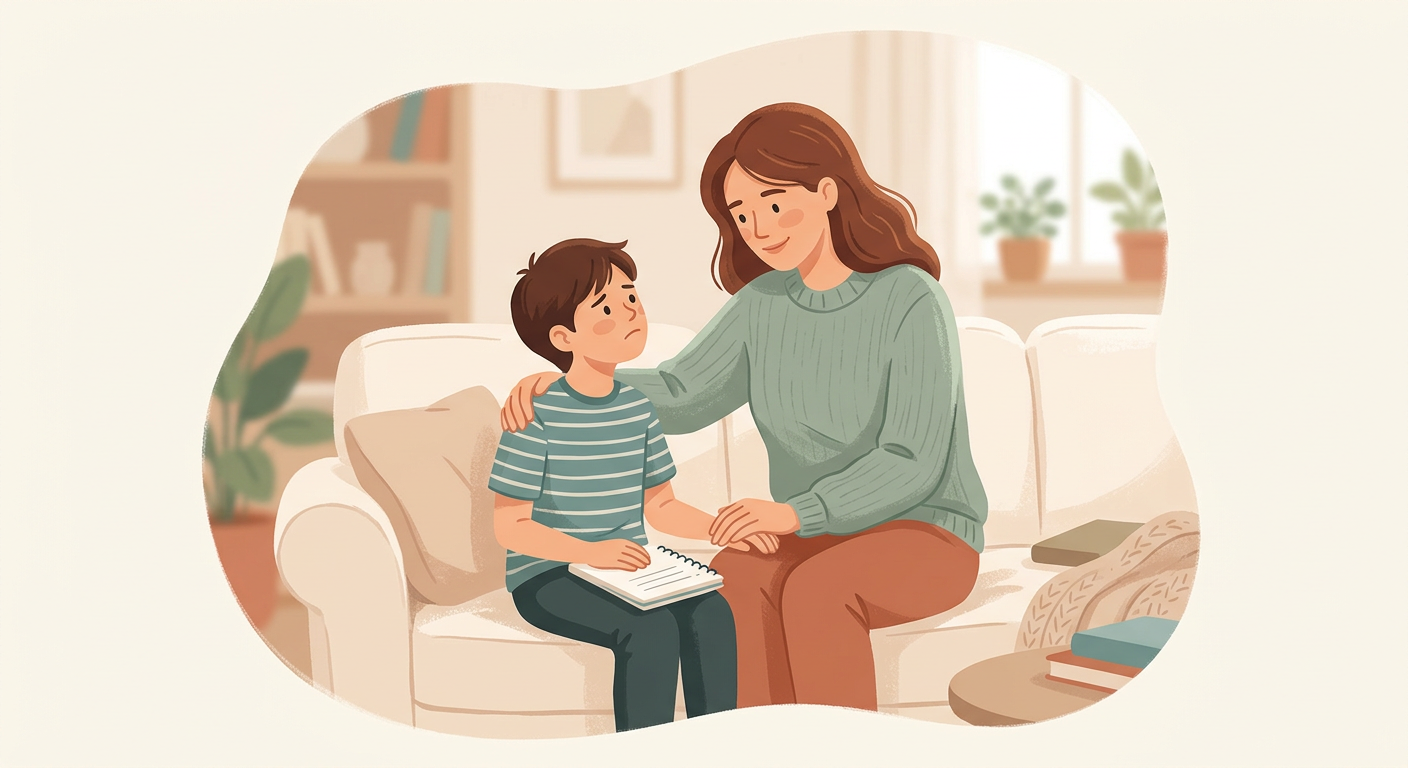
Your 9-year-old tells you the teacher "has it in for them." You've noticed their grades are dropping. You…
This is just 1 of 100+ questions in the Parenting Test
Want to know your real style and get a full diagnosis? Takes 2 minutes, free.
Take the Parenting Test →Why this situation matters
Es un momento desafiante cuando tu hijo llega a casa sintiéndose atacado por su profesor y, al mismo tiempo, sus notas empiezan a bajar. La forma en que respondas a esta situación puede tener un impacto significativo en la relación de tu hijo con la escuela, su autoestima y su confianza en ti como su apoyo principal. Es natural querer proteger a tu hijo y, a la vez, entender qué está sucediendo realmente en el aula.
Tu reacción modela cómo tu hijo afrontará futuros conflictos y desafíos. Si te muestras impulsivo, tu hijo podría imitar esa conducta. Si, en cambio, te acercas con curiosidad y una actitud de resolución de problemas, le enseñas habilidades valiosas de comunicación y mediación. La clave está en buscar un equilibrio entre validar sus sentimientos y obtener una comprensión completa de la situación.
Considerar todos los ángulos antes de actuar te permitirá ofrecer el mejor apoyo a tu hijo y fomentar un entorno de aprendizaje positivo. ¿Cómo crees que deberías abordar esta situación delicada, teniendo en cuenta tanto las emociones de tu hijo como la necesidad de clarificar la verdad?
The possible answers
These are the options you'll see in the test. Each one measures something different — we won't tell you which is best here (that's what the test is for 😉).
- AGo to school the next day to angrily confront the teacher
- BListen to them, gather specific examples, and request a calm meeting
- CTell them, "Teachers are always right"
- DWait to see if it resolves itself
What the experts say
Joyce L. Epstein
Director of the Center on School, Family, and Community Partnerships, Johns Hopkins University
“Effective collaboration between family and school is a shared responsibility that directly impacts a child's learning success and development.”
Daniel Siegel
Clinical Neurobiologist, author of 'The Whole-Brain Child'
“Validating a child's emotional experience, listening without judgment, is the first step in helping them regulate their emotions and understand what they feel.”
Haim Ginott
Child psychologist, author of 'Between Parent and Child'
“When a child feels heard, even if we don’t agree with them, their need to defend themselves diminishes and they are more open to guidance.”
Devil's advocate
Common objection
Isn't so much protocol a bit overkill? Ultimately, they just want me to defend them at school, not turn into a private investigator.
Why it falls short
We understand the urgency, but defending your child isn't just about acting, it's about acting effectively. A good 'protocol' ensures your defense is strong and has a positive impact, rather than creating more conflict or frustration.
This is just 1 of 100+ questions in the Parenting Test
Want to know your real style and get a full diagnosis? Takes 2 minutes, free.
Take the Parenting Test →Related questions
Your 16-year-old says they don't want to go to university; they want to be a DJ. You were expecting medicine. You...
Autonomía con responsabilidad
Your child's teacher tells you your 6-year-old bit another child. When you ask him at home, he says, 'He took my pencil.' You...
Disciplina consciente, Educar emociones
Part of the Fami ecosystem
Sites made by families, for families. Start with the two most loved:
The task manager that coordinates your whole family — without the stress.
Visit →famiEduca.comA platform where children learn on their own, the fun way.
Visit →Worldwide guide of destinations and points of interest for family travel.
Restaurants where great food is also for the kids.
Challenges and games to rediscover the joy of playing together.
Easy recipes to cook with the little ones.
Films handpicked to watch as a family.
Reads for small big readers.