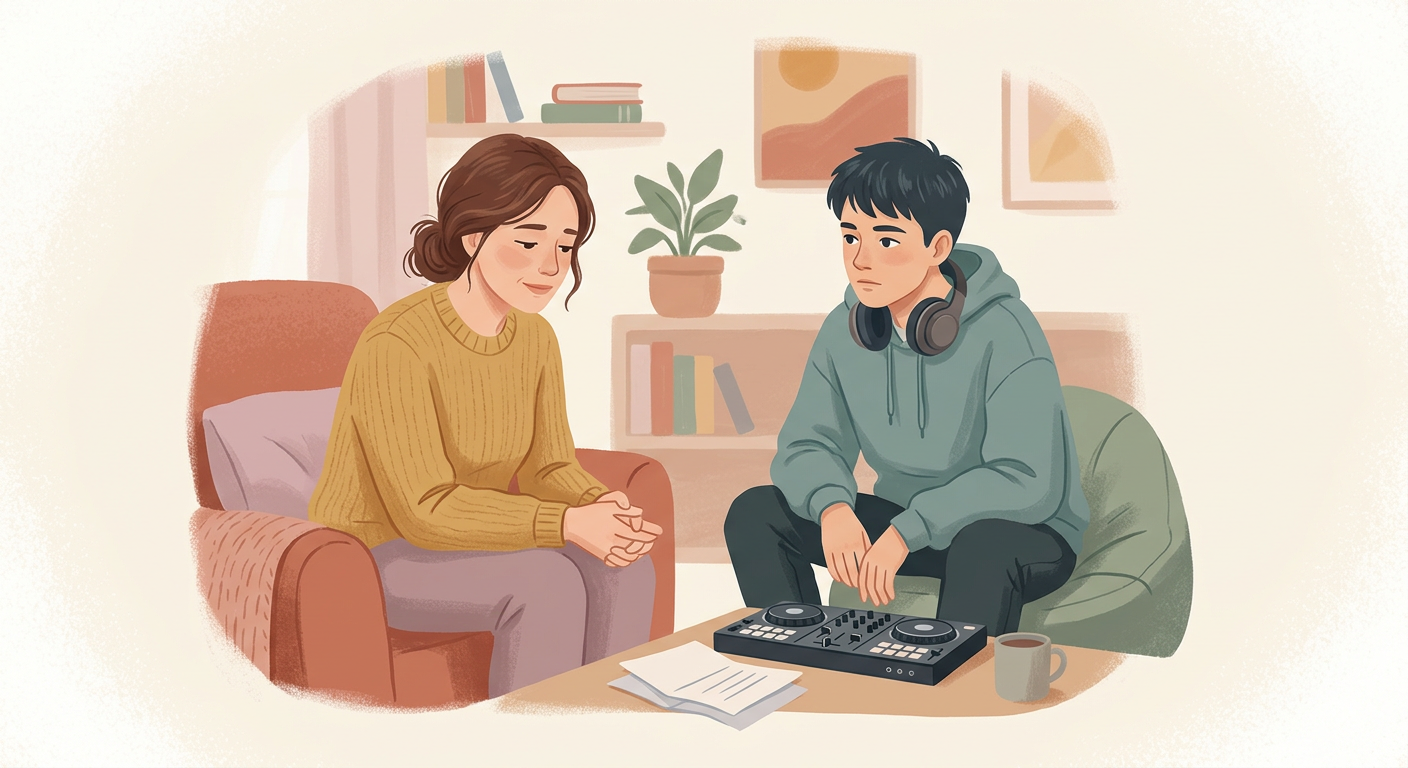
Your 16-year-old says they don't want to go to university; they want to be a DJ. You were expecting medicine. You...
This is just 1 of 100+ questions in the Parenting Test
Want to know your real style and get a full diagnosis? Takes 2 minutes, free.
Take the Parenting Test →Why this situation matters
Es completamente natural que, como madres y padres, tengamos sueños y expectativas para el futuro de nuestros hijos. A menudo, estas expectativas se construyen a partir de nuestras propias experiencias, deseos de protegerlos de dificultades o la creencia de saber qué es "lo mejor" para su éxito y felicidad. Cuando un hijo adolescente expresa un deseo que choca con estos planes, la situación puede generar una mezcla compleja de emociones: sorpresa, preocupación, quizás algo de decepción o incluso frustración. Es un momento que pone a prueba nuestra flexibilidad y capacidad para diferenciar entre nuestros anhelos y los de ellos.
La adolescencia es una etapa crucial de auto-descubrimiento y la formación de identidad. Los jóvenes exploran quiénes son y qué quieren hacer con sus vidas. En este proceso, es común que sus ideas difieran de las de sus padres. La forma en que respondemos a estos momentos no solo moldea su autoconfianza y su sentido de valía, sino que también influye profundamente en la calidad de la relación que tenemos con ellos. Un buen manejo de estas situaciones puede reforzar el vínculo, mientras que una reacción impulsiva o descalificadora puede crear barreras difíciles de superar.
Comprender cómo navegar estas conversaciones y decisiones es fundamental para fomentar la autonomía de nuestros hijos sin dejar de ofrecerles el apoyo y la guía que aún necesitan. Se trata de encontrar un equilibrio entre respetar sus aspiraciones y ayudarles a pensar de forma crítica y realista sobre el camino que eligen. ¿Qué tipo de respuesta crees que sería la más constructiva en una situación como esta?
The possible answers
These are the options you'll see in the test. Each one measures something different — we won't tell you which is best here (that's what the test is for 😉).
- A"You can't make a living as a DJ. Period."
- BAsk them for a plan: how, timelines, plan B, and funding
- C"Whatever you think is best," and you resign yourself
- DEnroll them in university without consulting them
What the experts say
Laurence Steinberg
adolescent development expert
“The key is to maintain high expectations while offering a great deal of support.”
Diana Baumrind
developmental psychologist
“Authoritative parents articulate reasons for their decisions and are open to negotiation.”
Richard Ryan
co-creator of Self-Determination Theory
“Autonomy is essential for well-being and intrinsic motivation.”
Devil's advocate
Common objection
But if I humor them with the DJ thing, aren't I opening the door for them to not do anything serious with their life? You have to be practical.
Why it falls short
Being practical doesn't mean closing doors without exploring alternatives. Demanding a detailed and realistic plan is precisely a form of responsible pragmatism. If the plan has no future, the adolescent themselves will see it, but having participated in the process.
This is just 1 of 100+ questions in the Parenting Test
Want to know your real style and get a full diagnosis? Takes 2 minutes, free.
Take the Parenting Test →Related questions
Part of the Fami ecosystem
Sites made by families, for families. Start with the two most loved:
The task manager that coordinates your whole family — without the stress.
Visit →famiEduca.comA platform where children learn on their own, the fun way.
Visit →Worldwide guide of destinations and points of interest for family travel.
Restaurants where great food is also for the kids.
Challenges and games to rediscover the joy of playing together.
Easy recipes to cook with the little ones.
Films handpicked to watch as a family.
Reads for small big readers.