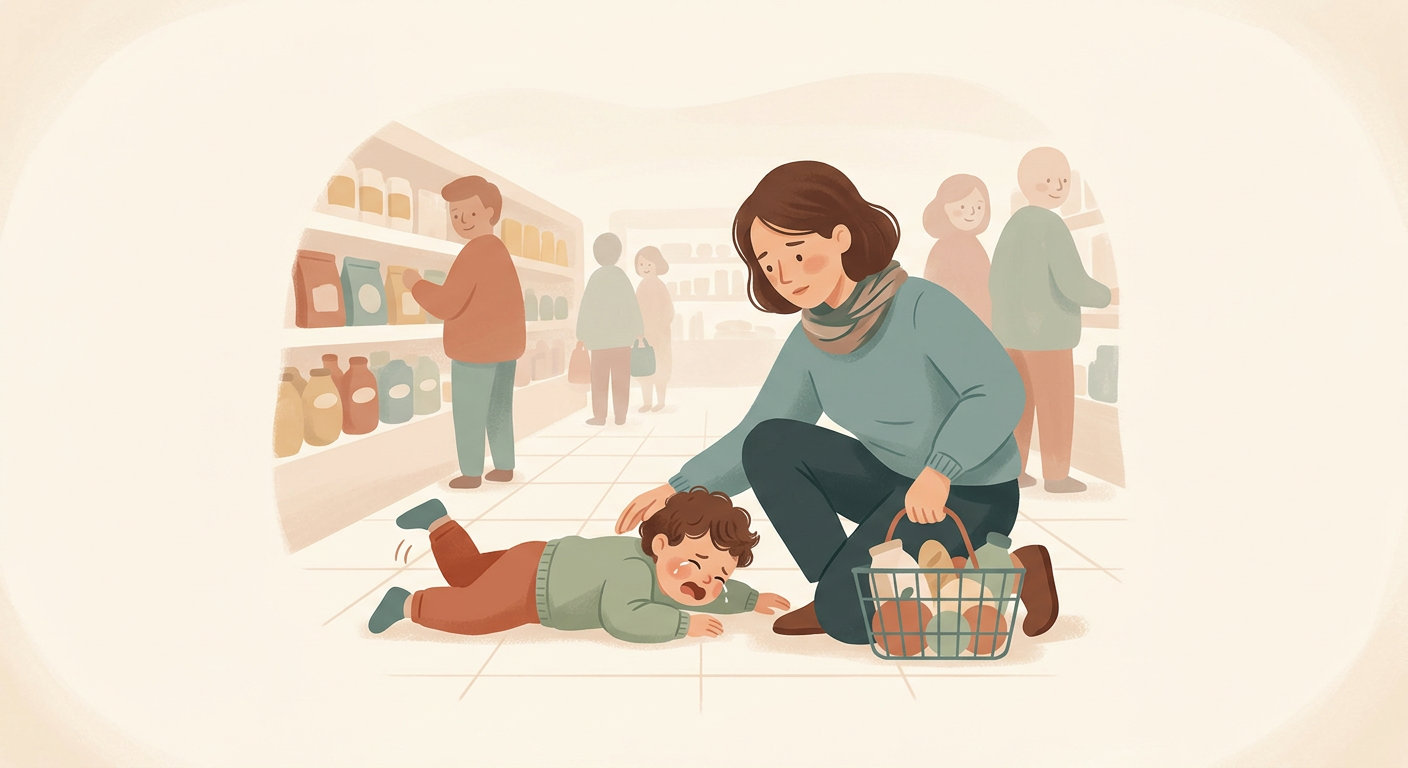
Your 2-year-old throws themselves onto the supermarket floor because you won't buy them cookies. People are staring.
This is just 1 of 100+ questions in the Parenting Test
Want to know your real style and get a full diagnosis? Takes 2 minutes, free.
Take the Parenting Test →Why this situation matters
Lidiar con una rabieta en un lugar público, como el supermercado, es uno de los mayores desafíos para cualquier padre. De repente, te encuentras en el centro de todas las miradas, sintiendo una mezcla de vergüenza, frustración y, a veces, incluso rabia. En esos momentos, es fácil sentir la presión de otros y dudar sobre la mejor manera de actuar. La forma en que respondemos a estas situaciones puede tener un impacto significativo en el comportamiento futuro de nuestros hijos y en la dinámica familiar a largo plazo.
La psicología infantil nos enseña que las rabietas son una parte normal del desarrollo; son la forma en que los niños pequeños expresan emociones intensas cuando aún no tienen las habilidades verbales para hacerlo. Sin embargo, la manera en que los padres manejan estas explosiones puede reforzar ciertos patrones o ayudar al niño a aprender a regular sus emociones. Es un acto de equilibrio entre validar los sentimientos del niño y establecer límites claros. No solo se trata de contener la situación en el momento, sino de enseñar valiosas lecciones para la vida.
Tu reacción en un momento de crisis como este no solo afecta el resultado inmediato, sino que también moldea la comprensión de tu hijo sobre cómo se manejan las emociones y los límites. Reflexionar sobre tus respuestas es clave para fomentar un desarrollo emocional saludable. Responde la siguiente pregunta y descubre qué dice tu instinto parental sobre esta situación común.
The possible answers
These are the options you'll see in the test. One is the ideal answer according to experts; the others fall short for specific reasons. Tap yours to see why.
Tap the option you would choose
What the experts say
Daniel Siegel
Child psychiatrist, UCLA
“Name it to tame it: naming the emotion reduces its neurological intensity.”
Alicia Lieberman
UCSF, early attachment
Devil's advocate
Common objection
But everyone is looking at me, and they'll think he's running the show if I don't punish him now.
Why it falls short
Other people's stares last 90 seconds; the pattern you establish lasts for years. Validating the emotion isn't giving in to the desire — you still don't buy the cookies. The child learns exactly that.
This is just 1 of 100+ questions in the Parenting Test
Want to know your real style and get a full diagnosis? Takes 2 minutes, free.
Take the Parenting Test →Related questions
Your 4-year-old has been in a 25-minute loop because you cut his banana, and "he wanted it whole." You even tried sticking it back together with a fork. It didn't work. You...
Validar y resolver
At the supermarket, your 5-year-old throws herself on the floor, screaming because you won't buy her a Kinder Surprise. People are staring. You...
Validar y contener
Part of the Fami ecosystem
Sites made by families, for families. Start with the two most loved:
The task manager that coordinates your whole family — without the stress.
Visit →famiEduca.comA platform where children learn on their own, the fun way.
Visit →Worldwide guide of destinations and points of interest for family travel.
Restaurants where great food is also for the kids.
Challenges and games to rediscover the joy of playing together.
Easy recipes to cook with the little ones.
Films handpicked to watch as a family.
Reads for small big readers.