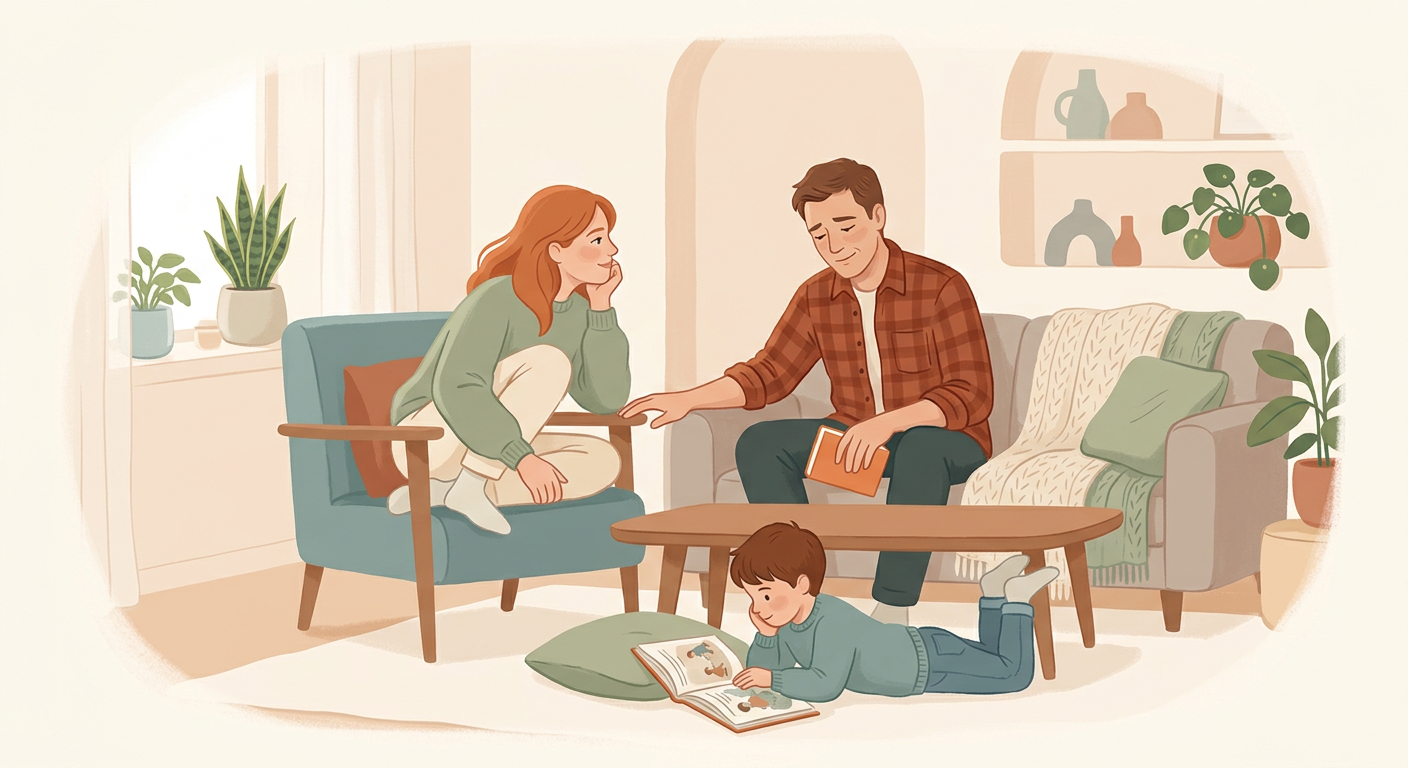
You've been on autopilot for a while: work, kids, sleep. You...
This is just 1 of 100+ questions in the Couple Test
See how you two work together, based on Gottman's research. Free, 3 minutes.
Take the Couple Test →Why this situation matters
Every relationship, at some point, can fall into a routine that feels more like a conveyor belt than a shared journey. When daily responsibilities like work, childcare, and basic household chores take over, it's easy for the unique spark that defines your couple's connection to dim. This isn't a sign of failure, but rather a common challenge that many long-term partners face.
Psychologically, sustained periods of "autopilot" can lead to a phenomenon known as habituation, where familiar stimuli (even your partner!) lose their novelty and emotional intensity. Over time, this can make partners feel less seen, less valued, and more like roommates than lovers. It erodes the sense of shared adventure and mutual discovery that is vital for keeping a relationship vibrant and resilient.
Addressing this inertia is crucial for maintaining intimacy and preventing emotional drift. Taking proactive steps to shake up the routine and prioritize couple time can rekindle closeness and restore a sense of purpose to your shared life. How do you navigate these periods of emotional autopilot with your partner?
The possible answers
Tap the option you would choose
What the experts say
John Gottman
Relationship Researcher, The Gottman Institute
“Happy couples develop 'love maps' and 'rituals of connection,' small routines that maintain friendship and passion.”
Sue Johnson
Creator of Emotionally Focused Therapy (EFT)
“The key to secure attachment in adults is accessibility, responsiveness, and engagement. Maintaining rituals of connection is accessibility in action.”
Jaak Panksepp
Neuroscientist, Emotion Researcher
“The 'SEEKING' system is activated when people pursue important goals. Maintaining connection with a partner is a primary goal for mutual well-being.”
Devil's advocate
Common objection
A weekly date, even at home, sounds like an obligation and isn't always appealing. If you're both exhausted, it's just another burden.
Why it falls short
The consistency of connection rituals is what makes them effective. They won't always be exciting, but the act of prioritizing 'us' sends a powerful message that nurtures attachment security, even when tired. It's an investment, not an imposition.
This is just 1 of 100+ questions in the Couple Test
See how you two work together, based on Gottman's research. Free, 3 minutes.
Take the Couple Test →Related questions
Your partner wants to go away for a weekend alone with their friends. You...
Autonomía y Conexión
You both retire and suddenly spend 24/7 together. Sparks fly. You…
Autonomía y Conexión
It's been months since you've done something together that wasn't 'functional' (shopping, errands, kids). You...
Acción Clave Conexión
You've been together for 15+ years and you're bored in the relationship, even though you still love them. You...
Innovar y reconectar
Your partner tells you they want to make plans with their friends by themselves on Saturday. You…
Autonomía fortalece conexión
Part of the Fami ecosystem
Sites made by families, for families. Start with the two most loved:
The task manager that coordinates your whole family — without the stress.
Visit →famiEduca.comA platform where children learn on their own, the fun way.
Visit →Worldwide guide of destinations and points of interest for family travel.
Restaurants where great food is also for the kids.
Challenges and games to rediscover the joy of playing together.
Easy recipes to cook with the little ones.
Films handpicked to watch as a family.
Reads for small big readers.