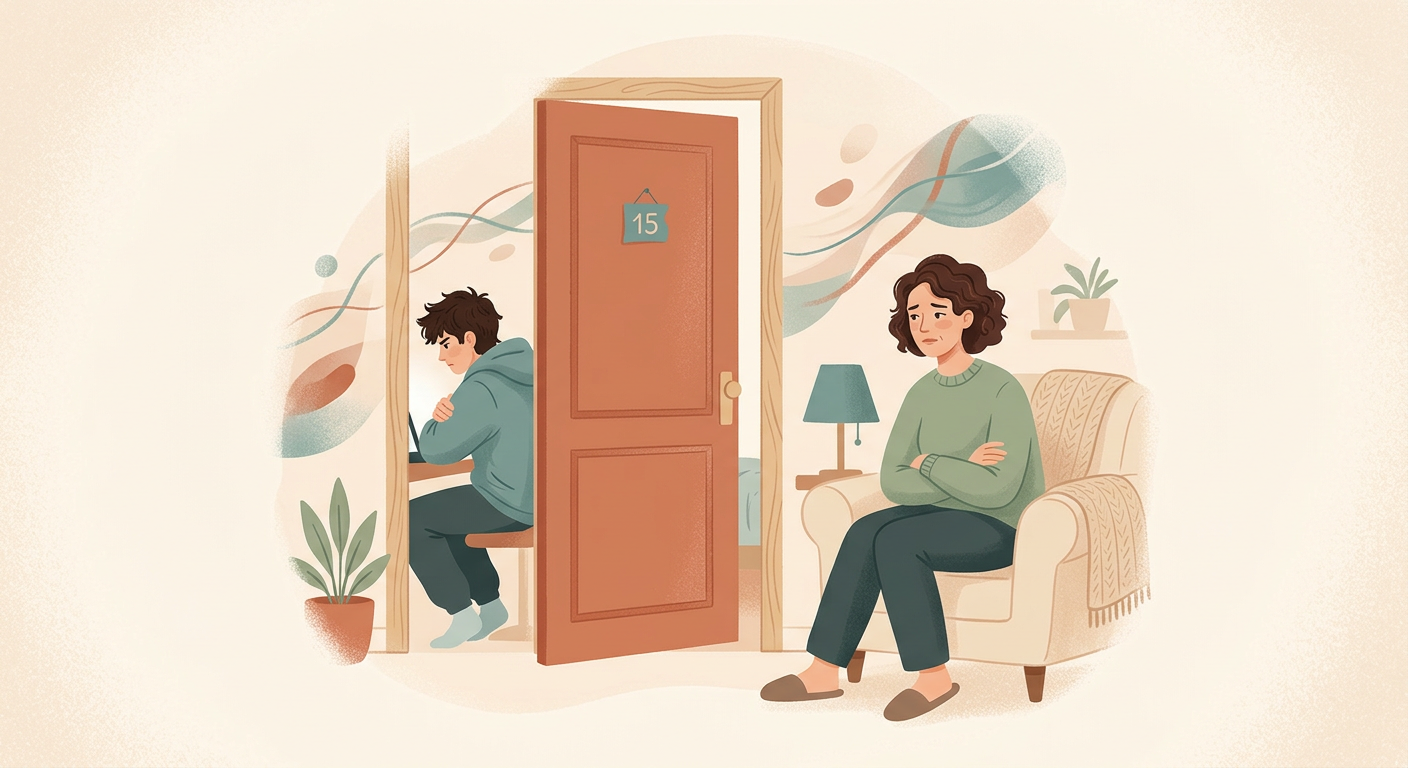
Your teenager has been holed up in their room for 3 days, irritable and snapping at everyone. You...
This is just 1 of 100+ questions in the Parenting Test
Want to know your real style and get a full diagnosis? Takes 2 minutes, free.
Take the Parenting Test →Why this situation matters
Como padre, ver a tu adolescente retirarse y volverse irritable puede ser preocupante y frustrante. Es natural querer entender qué está pasando y cómo puedes apoyarles sin invadir su espacio. Los cambios de humor y el deseo de privacidad son comunes en la adolescencia, ya que están lidiando con una montaña rusa de cambios hormonales, presiones sociales y académicos, y la búsqueda de su identidad.
Este comportamiento a menudo es una señal, una forma en que tu hijo o hija comunica que está luchando con algo, aunque no sepa cómo expresarlo verbalmente. Tu reacción puede influir enormemente en cómo se desarrolle esta fase. Mantener una conexión, incluso cuando parecen rechazarla, es clave para reforzar vuestro vínculo y asegurarles que estás ahí para ellos, incluso en sus momentos más difíciles.
Elegir la forma adecuada de responder a estos momentos es crucial para fomentar la confianza y la comunicación a largo plazo, y para ayudarles a desarrollar habilidades emocionales saludables. ¿Cómo abordas estas situaciones en tu hogar? Descubre más sobre tu estilo parental en este escenario.
The possible answers
These are the options you'll see in the test. Each one measures something different — we won't tell you which is best here (that's what the test is for 😉).
- A"In this house, we greet each other. Come out for dinner."
- BYou bring them some dinner and stay for a bit without pressure.
- CYou leave them alone; they'll get over it.
- DYou book an appointment with a therapist without telling them.
What the experts say
Daniel Siegel
Neurobiologist and child psychiatrist
“Attunement is key; it involves entering another's internal world, making them feel understood and seen.”
Laurence Steinberg
Developmental psychologist
“Parents must balance control and autonomy during adolescence. Warm and responsive support promotes better psychological adjustment.”
Diana Baumrind
Developmental psychologist
“The authoritative parenting style is characterized by high expectations and high responsiveness, promoting social competence and self-esteem in young people.”
Devil's advocate
Common objection
But if I bring dinner to their room, aren't I reinforcing that they can shut themselves away and treat me badly? It might seem like I'm condoning the anger.
Why it falls short
Your action communicates 'I see you and I care about you,' not 'I approve of your bad mood.' It focuses on maintaining connection and nurturing them, laying the groundwork to address the behavior once the emotional intensity has subsided. It's not a reward; it's an act of care.
This is just 1 of 100+ questions in the Parenting Test
Want to know your real style and get a full diagnosis? Takes 2 minutes, free.
Take the Parenting Test →Related questions
Your 2-year-old falls, looks at you, assesses the situation for 3 seconds, and then starts crying as if they've had an amputation. They haven't actually hurt themselves at all. You...
Validar y regular
Your 16-year-old daughter, usually open, has been answering in monosyllables for a month. There's no apparent drama. You...
Conexión gentil, Autonomía respetada
Your child is crying inconsolably because a friend didn't invite them to their birthday party. You...
Validar y contener
Your 15-year-old tells you, 'sometimes I think the world would be better off without me.'
Ideación suicida verbalizada = consulta profesional, siempre.
At the birthday party, your 5-year-old loses the game of musical chairs and throws himself on the floor screaming, "I WANT TO DIE." There are 12 parents watching. You…
Validar, nombrar y guiar
Your 5-year-old is crying inconsolably because their drawing 'turned out all wrong'.
Valida emoción, no resuelvas tarea.
Part of the Fami ecosystem
Sites made by families, for families. Start with the two most loved:
The task manager that coordinates your whole family — without the stress.
Visit →famiEduca.comA platform where children learn on their own, the fun way.
Visit →Worldwide guide of destinations and points of interest for family travel.
Restaurants where great food is also for the kids.
Challenges and games to rediscover the joy of playing together.
Easy recipes to cook with the little ones.
Films handpicked to watch as a family.
Reads for small big readers.