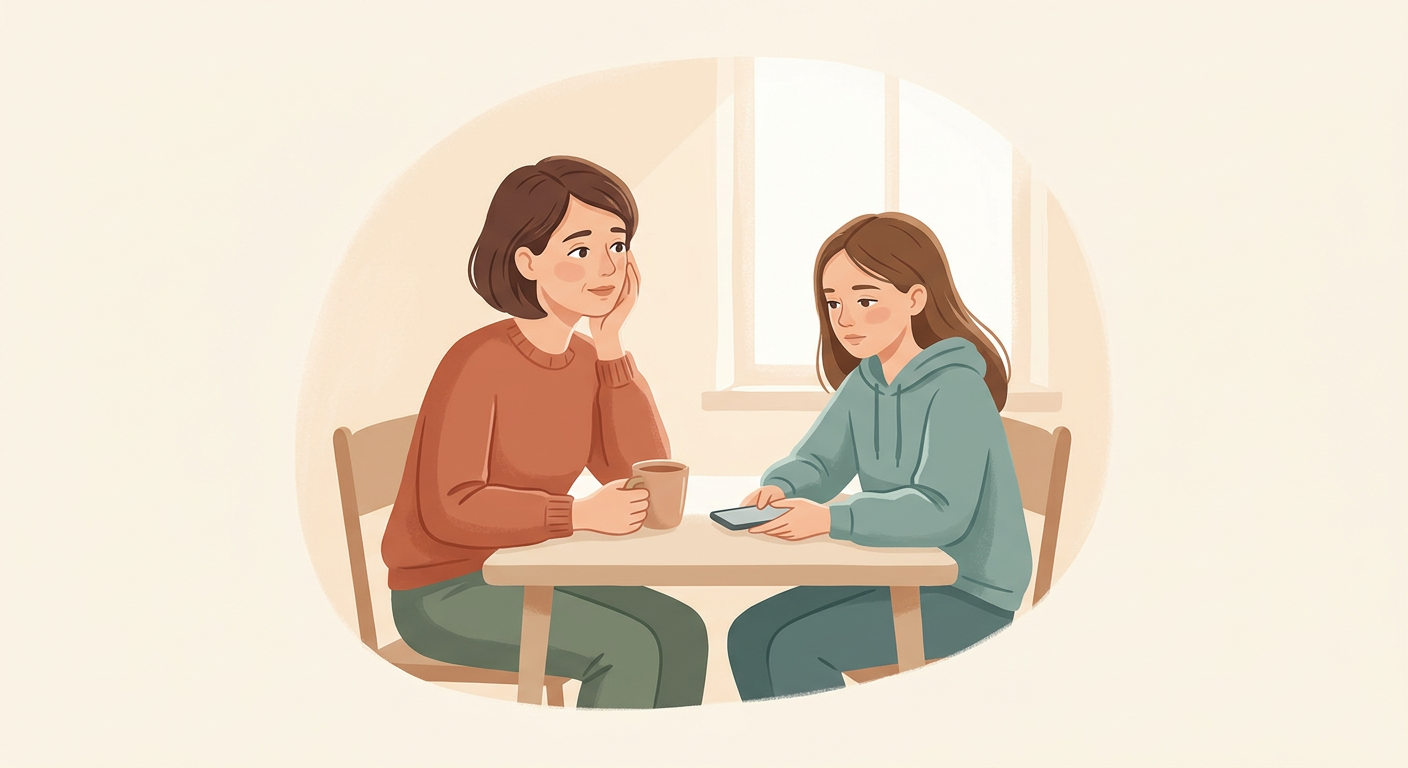
Your 16-year-old daughter, usually open, has been answering in monosyllables for a month. There's no apparent drama. You...
This is just 1 of 100+ questions in the Parenting Test
Want to know your real style and get a full diagnosis? Takes 2 minutes, free.
Take the Parenting Test →Why this situation matters
Lidiar con la adolescencia puede ser un verdadero reto, especialmente cuando nuestros hijos, que antes eran tan abiertos, de repente se vuelven silenciosos o distantes. Es natural que te preocupe este cambio en tu hija, y querer entender qué le pasa es una señal de tu amor y dedicación como madre o padre. La forma en que respondemos a estos momentos de introspección adolescente puede tener un impacto duradero en nuestra relación y en el desarrollo emocional de nuestros hijos.
Durante la adolescencia, los jóvenes están en un proceso complejo de formación de identidad. Esto a menudo implica explorar nuevas ideas, sentimientos y, a veces, un deseo de mayor independencia y privacidad. Lo que para un adulto puede parecer un cierre o un problema, para un adolescente podría ser una fase normal de procesamiento interno. Es crucial recordar que su comportamiento no siempre es un reflejo de que algo 'malo' esté sucediendo, aunque sí requiere nuestra atención y una respuesta reflexiva.
Tu reacción en estos momentos clave no solo influye en cómo tu hija se sentirá al respecto, sino que también enseña cómo manejar las dificultades y la comunicación en el futuro. Es una oportunidad para fortalecer la confianza o, por el contrario, generar distancia sin querer. Entender cómo navegar esta situación es fundamental para seguir siendo un apoyo firme y amoroso. Descubre qué enfoque podría ser el más beneficioso para ambos.
The possible answers
These are the options you'll see in the test. Each one measures something different — we won't tell you which is best here (that's what the test is for 😉).
- APress her until she tells you what's wrong
- BSuggest short, one-on-one activities without interrogating her
- CGive her space; she'll talk when she's ready
- DRead her diary / messages to find out
What the experts say
Laurence Steinberg
Developmental Psychologist, adolescent expert
“Parental monitoring should be a balance that respects privacy and fosters trust, not constant checking.”
Judith Smetana
Developmental Psychologist, expert in adolescent autonomy
“Adolescent autonomy does not imply the absence of parents, but rather a change in the nature of the relationship, towards negotiation and mutual respect.”
John Gottman
Relationship Researcher
“Maintaining daily 'points of connection' without a hidden agenda strengthens family bonds and the foundation of friendship.”
Devil's advocate
Common objection
What if she never talks? I can't wait forever while seeing that something is bothering her. I need to know what's wrong.
Why it falls short
Active patience, meaning offering opportunities and maintaining an open attitude, usually builds trust and creates the right moment for communication. Forcing them to talk rarely results in an honest conversation and can further close avenues of communication.
This is just 1 of 100+ questions in the Parenting Test
Want to know your real style and get a full diagnosis? Takes 2 minutes, free.
Take the Parenting Test →Related questions
Your 2-year-old falls, looks at you, assesses the situation for 3 seconds, and then starts crying as if they've had an amputation. They haven't actually hurt themselves at all. You...
Validar y regular
Your teenager has been holed up in their room for 3 days, irritable and snapping at everyone. You...
Conexión en la distancia
Your child is crying inconsolably because a friend didn't invite them to their birthday party. You...
Validar y contener
Your 15-year-old tells you, 'sometimes I think the world would be better off without me.'
Ideación suicida verbalizada = consulta profesional, siempre.
At the birthday party, your 5-year-old loses the game of musical chairs and throws himself on the floor screaming, "I WANT TO DIE." There are 12 parents watching. You…
Validar, nombrar y guiar
Your 5-year-old is crying inconsolably because their drawing 'turned out all wrong'.
Valida emoción, no resuelvas tarea.
Part of the Fami ecosystem
Sites made by families, for families. Start with the two most loved:
The task manager that coordinates your whole family — without the stress.
Visit →famiEduca.comA platform where children learn on their own, the fun way.
Visit →Worldwide guide of destinations and points of interest for family travel.
Restaurants where great food is also for the kids.
Challenges and games to rediscover the joy of playing together.
Easy recipes to cook with the little ones.
Films handpicked to watch as a family.
Reads for small big readers.