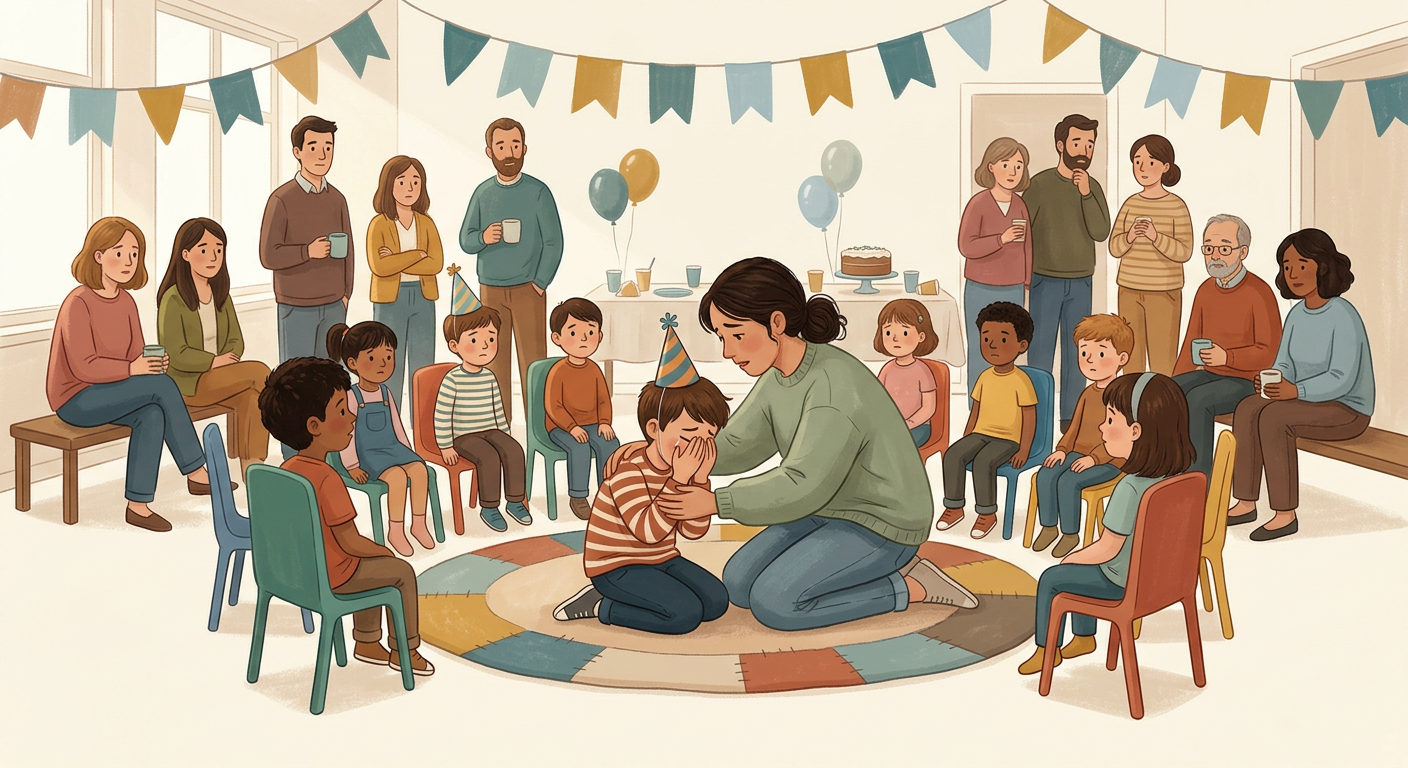
At the birthday party, your 5-year-old loses the game of musical chairs and throws himself on the floor screaming, "I WANT TO DIE." There are 12 parents watching. You…
This is just 1 of 100+ questions in the Parenting Test
Want to know your real style and get a full diagnosis? Takes 2 minutes, free.
Take the Parenting Test →Why this situation matters
Ver a tu hijo expresar emociones extremas, especialmente en público, puede ser increíblemente desafiante para cualquier padre. Momentos como este, cuando un pequeño dice algo tan fuerte como "quiero morir" después de una decepción, ponen a prueba nuestra capacidad de mantener la calma y responder de forma efectiva. Tu reacción no solo impacta en cómo gestiona esa situación, sino que modela su futura inteligencia emocional.
La psicología infantil nos enseña que los niños, especialmente a edades tempranas, no siempre tienen las herramientas para procesar sentimientos intensos como la frustración o la vergüenza. A menudo, recurren a un lenguaje dramático para expresar la magnitud de su dolor o desilusión, incluso si no comprenden el significado literal de sus palabras. Es en estos instantes donde, como padres, tenemos la oportunidad crucial de validar sus sentimientos, enseñarles a nombrar lo que les pasa y ofrecerles estrategias de afrontamiento saludables.
Considera cómo tu intervención ahora puede ayudar a tu hijo a desarrollar resiliencia frente a las inevitables decepciones de la vida. ¿Estás listo para explorar cómo tu estilo de crianza se alinea con las mejores prácticas en estas situaciones?
The possible answers
These are the options you'll see in the test. One is the ideal answer according to experts; the others fall short for specific reasons. Tap yours to see why.
Tap the option you would choose
What the experts say
John Gottman
Psychologist and family researcher
“The key to 'Emotion Coaching' is to view the child's negative emotions as an opportunity for intimacy and teaching.”
Daniel Siegel
Neuropsychiatrist and author
“Name it to tame it. When children can label their emotions, the physiological intensity of those emotions decreases.”
Devil's advocate
Common objection
But it's so embarrassing, and for me too. I don't want him to be the type of child who makes a drama out of everything, and I don't want to encourage such an exaggeration by validating it.
Why it falls short
Worrying about the 'drama' is understandable, but validating the emotion is not condoning the behavior. It is fundamental for the child to learn to identify, express, and ultimately regulate their emotions. Ignoring or suppressing them only makes them grow larger.
This is just 1 of 100+ questions in the Parenting Test
Want to know your real style and get a full diagnosis? Takes 2 minutes, free.
Take the Parenting Test →Related questions
Your 2-year-old falls, looks at you, assesses the situation for 3 seconds, and then starts crying as if they've had an amputation. They haven't actually hurt themselves at all. You...
Validar y regular
Your teenager has been holed up in their room for 3 days, irritable and snapping at everyone. You...
Conexión en la distancia
Your 16-year-old daughter, usually open, has been answering in monosyllables for a month. There's no apparent drama. You...
Conexión gentil, Autonomía respetada
Your child is crying inconsolably because a friend didn't invite them to their birthday party. You...
Validar y contener
Your 15-year-old tells you, 'sometimes I think the world would be better off without me.'
Ideación suicida verbalizada = consulta profesional, siempre.
Your 5-year-old is crying inconsolably because their drawing 'turned out all wrong'.
Valida emoción, no resuelvas tarea.
Part of the Fami ecosystem
Sites made by families, for families. Start with the two most loved:
The task manager that coordinates your whole family — without the stress.
Visit →famiEduca.comA platform where children learn on their own, the fun way.
Visit →Worldwide guide of destinations and points of interest for family travel.
Restaurants where great food is also for the kids.
Challenges and games to rediscover the joy of playing together.
Easy recipes to cook with the little ones.
Films handpicked to watch as a family.
Reads for small big readers.