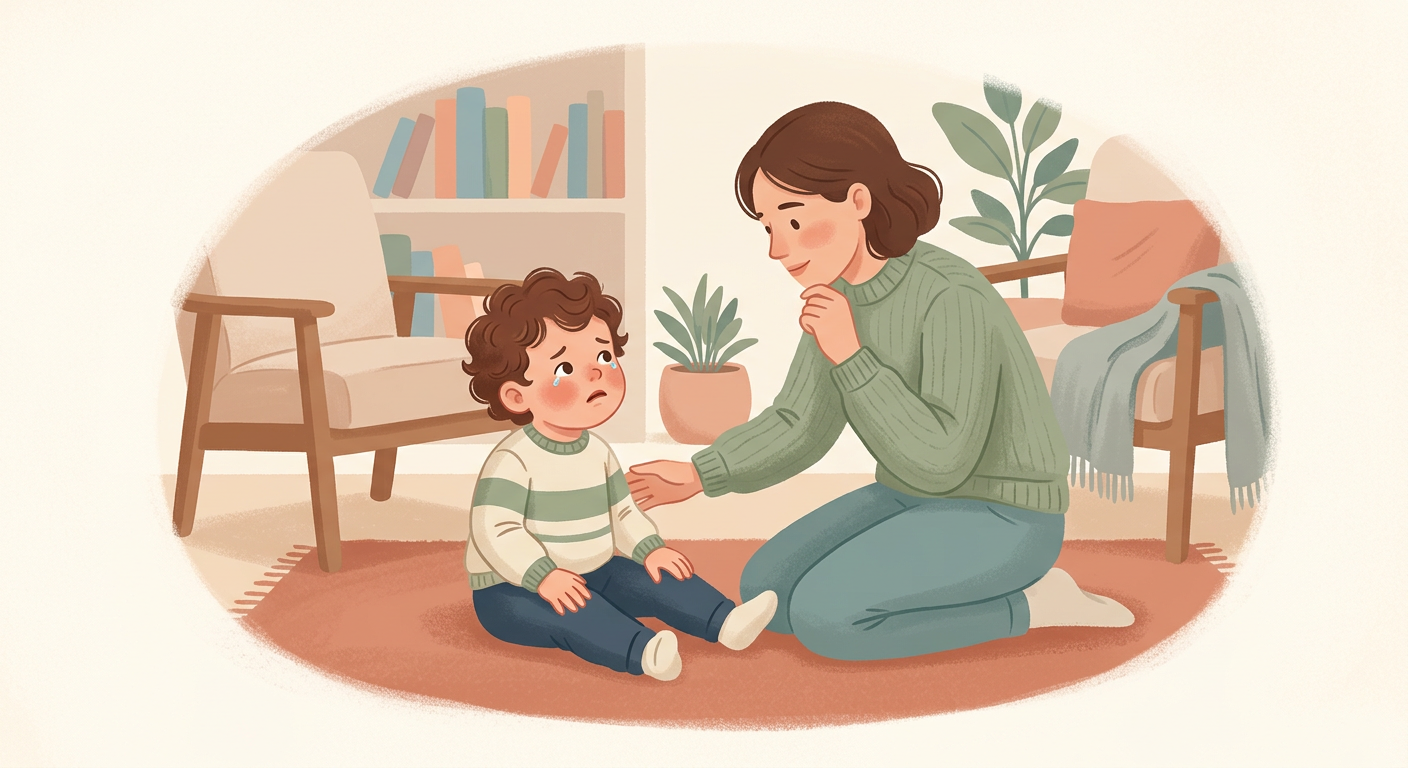
Your 2-year-old falls, looks at you, assesses the situation for 3 seconds, and then starts crying as if they've had an amputation. They haven't actually hurt themselves at all. You...
This is just 1 of 100+ questions in the Parenting Test
Want to know your real style and get a full diagnosis? Takes 2 minutes, free.
Take the Parenting Test →Why this situation matters
Como padres, a menudo nos enfrentamos a situaciones en las que nuestros hijos reaccionan de manera intensa a eventos que, para nosotros, parecen menores. Un tropiezo sin consecuencias físicas se convierte en una oportunidad para un llanto desconsolado. En esos momentos, reaccionar de forma adecuada es crucial, no solo para calmar la situación inmediata, sino también para enseñarles a gestionar sus emociones y a confiar en sí mismos.
La forma en que respondemos a estas "crisis" emocionales, especialmente en los primeros años, influye directamente en el desarrollo de la inteligencia emocional de nuestros hijos. ¿Validamos sus sentimientos, les enseñamos resiliencia o, sin querer, aumentamos su dependencia? Entender la psicología detrás de estas reacciones infantiles nos ayuda a elegir un camino que fomente su bienestar a largo plazo.
Cada respuesta que damos modela cómo nuestros hijos aprenderán a interpretar el mundo y sus propias experiencias. Por ello, pensar en cómo abordamos estos escenarios cotidianos puede marcar una gran diferencia. Descubre qué tipo de respuesta es la más efectiva en esta situación.
The possible answers
These are the options you'll see in the test. Each one measures something different — we won't tell you which is best here (that's what the test is for 😉).
- A"It's nothing, get up," and you carry on.
- BYou bend down, look at them, and ask where it hurts.
- CYou scoop them up and give them a thousand kisses.
- DYou distract them with something shiny.
What the experts say
Alan Sroufe
Professor of Psychology, U. of Minnesota
“The caregiver's response to the child's distress is crucial in shaping emotional regulation. Validation and sensitive support build the child's capacity to manage stress.”
Daniel Siegel
Neuropsychiatrist, U.C.L.A.
“Name it to tame it: Helping children identify what they feel is the first step in processing those emotions and learning to regulate them. Validating their experience is key.”
Diana Baumrind
Developmental Psychologist, U.C. Berkeley
“Authoritative parents, who respond to their children's emotional needs in a warm and sensitive yet firm manner, foster emotional competence and autonomy.”
Devil's advocate
Common objection
Doesn't the parent have anything better to do than validate fake crying? It's not a big deal. Sometimes you have to be practical and just move on.
Why it falls short
I understand the urgency, but these small moments are crucial. Your attention for a few seconds isn't 'wasting time'; it's investing in the emotional management tools your child will use throughout their life. It teaches them to trust you for support and to understand their own reactions.
This is just 1 of 100+ questions in the Parenting Test
Want to know your real style and get a full diagnosis? Takes 2 minutes, free.
Take the Parenting Test →Related questions
Your teenager has been holed up in their room for 3 days, irritable and snapping at everyone. You...
Conexión en la distancia
Your 16-year-old daughter, usually open, has been answering in monosyllables for a month. There's no apparent drama. You...
Conexión gentil, Autonomía respetada
Your child is crying inconsolably because a friend didn't invite them to their birthday party. You...
Validar y contener
Your 15-year-old tells you, 'sometimes I think the world would be better off without me.'
Ideación suicida verbalizada = consulta profesional, siempre.
At the birthday party, your 5-year-old loses the game of musical chairs and throws himself on the floor screaming, "I WANT TO DIE." There are 12 parents watching. You…
Validar, nombrar y guiar
Your 5-year-old is crying inconsolably because their drawing 'turned out all wrong'.
Valida emoción, no resuelvas tarea.
Part of the Fami ecosystem
Sites made by families, for families. Start with the two most loved:
The task manager that coordinates your whole family — without the stress.
Visit →famiEduca.comA platform where children learn on their own, the fun way.
Visit →Worldwide guide of destinations and points of interest for family travel.
Restaurants where great food is also for the kids.
Challenges and games to rediscover the joy of playing together.
Easy recipes to cook with the little ones.
Films handpicked to watch as a family.
Reads for small big readers.