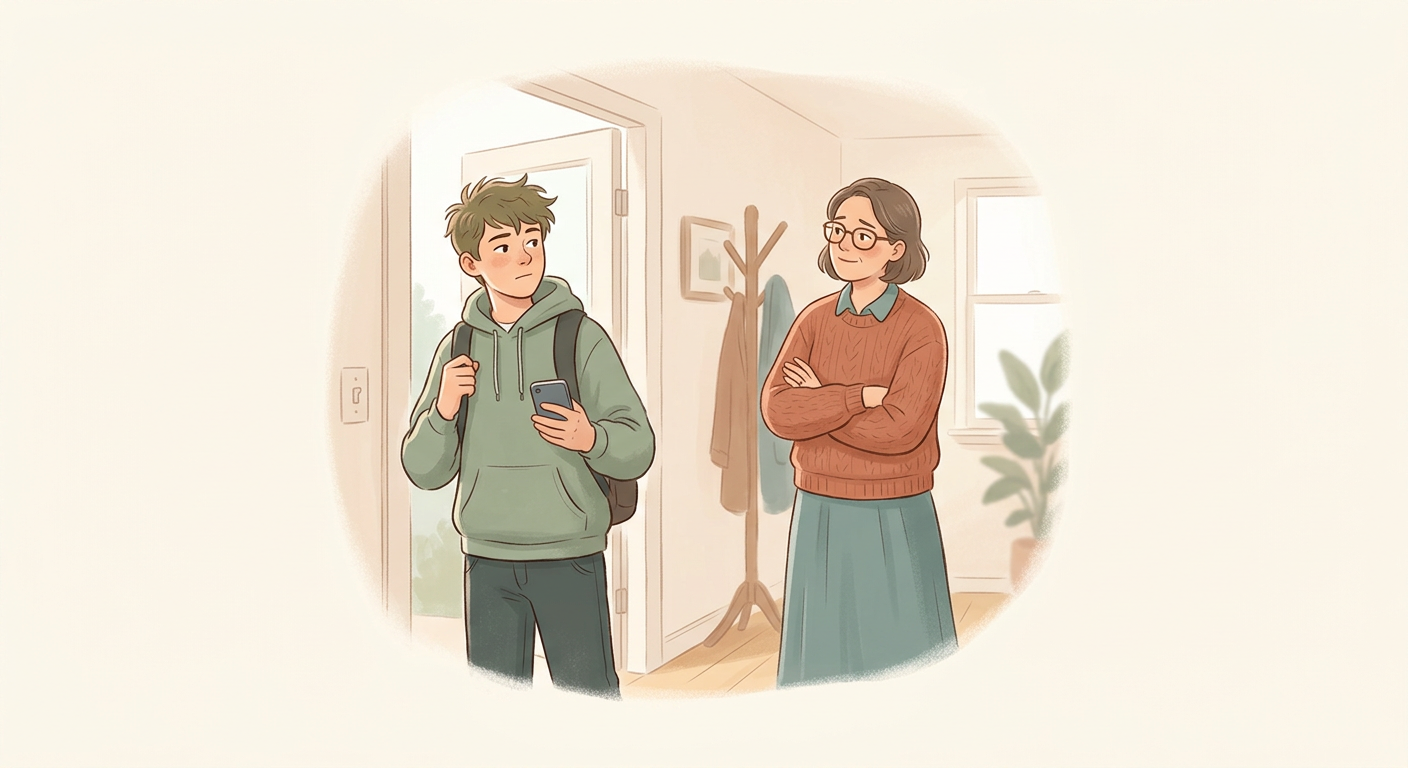
Your 15-year-old tells you: "I'm going to Marcos's house to study." You know Marcos isn't home today. You...
This is just 1 of 100+ questions in the Parenting Test
Want to know your real style and get a full diagnosis? Takes 2 minutes, free.
Take the Parenting Test →Why this situation matters
La adolescencia es una etapa de grandes cambios, donde los jóvenes buscan más independencia y muchas veces prueban los límites. Como padres, es natural sentir una mezcla de orgullo por su crecimiento y preocupación por su seguridad. Cuando tu hijo adolescente te dice una "mentirilla", incluso sobre algo que parece trivial, puede generar una disonancia importante en la relación. Te preguntas si hay algo más detrás, o si quizás tu hijo siente que no puede ser honesto contigo.
Estas situaciones ponen a prueba la confianza que has construido y la forma en que te comunicas. Reaccionar de manera impulsiva o excesivamente controladora podría socavar esa confianza, empujando a tu hijo a ser menos transparente en el futuro. Por otro lado, ignorar la situación por completo podría interpretarse como una falta de interés o de límites claros.
Es fundamental gestionar estos momentos con una combinación de firmeza y empatía. La forma en que elijas manejar esta situación no solo influirá en el comportamiento actual de tu hijo, sino que también sentará las bases para futuras interacciones y para el desarrollo de su sentido de responsabilidad. ¿Cómo abordarías esta situación para fomentar la honestidad y mantener un vínculo fuerte con tu adolescente?
The possible answers
Tap the option you would choose
What the experts say
M. Kerr & H. Stattin
Researchers, experts in adolescent development
“Parental monitoring predictive of positive outcomes is characterized by knowing children's activities through open communication, not through intrusion or espionage.”
Laurence Steinberg
Professor of Psychology, adolescence expert
“An authoritative parenting style, which combines high demands with high warmth and openness, is the most consistent with healthy psychological development in adolescence.”
Daniel Siegel
Child neuropsychiatrist, author
“The key is connection and communication. When adolescents feel their emotional world is understood, they are more likely to share the truth, even when it's difficult.”
Devil's advocate
Common objection
What if they lie again or shut down? Asking so directly might make them defensive and unwilling to tell me anything.
Why it falls short
It is a risk, yes. But the alternative (not asking or spying) undermines the relationship in the long term. A direct and calm approach shows that you value their honesty and are willing to listen, even if the initial answer isn't what you wanted. It's an invitation to trust, not an interrogation.
This is just 1 of 100+ questions in the Parenting Test
Want to know your real style and get a full diagnosis? Takes 2 minutes, free.
Take the Parenting Test →Related questions
Your teenager fails 4 subjects. You...
Autonomía con límites
Your 17-year-old comes home from a party. They smell of alcohol. They're walking fine and you picked them up in their friend's dad's car (the friend wasn't driving). You...
Diálogo retrasado, Límites claros
Your 15-year-old daughter arrives home an hour late from an outing and didn't answer her phone. You...
Diálogo, Límites Respetuosos
Your 14-year-old daughter asks you to drop her off at the corner, not right at the school gates, because she doesn't want to be seen with you. You...
Autonomía, Validación e Intimidad
You accidentally find messages on their phone suggesting they're trying alcohol on weekends. You…
Diálogo indirecto, confianza
Your 16-year-old tells you they're vegan and demands that the entire family change their eating habits.
Apoyo individual + sistema familiar negociado.
Part of the Fami ecosystem
Sites made by families, for families. Start with the two most loved:
The task manager that coordinates your whole family — without the stress.
Visit →famiEduca.comA platform where children learn on their own, the fun way.
Visit →Worldwide guide of destinations and points of interest for family travel.
Restaurants where great food is also for the kids.
Challenges and games to rediscover the joy of playing together.
Easy recipes to cook with the little ones.
Films handpicked to watch as a family.
Reads for small big readers.