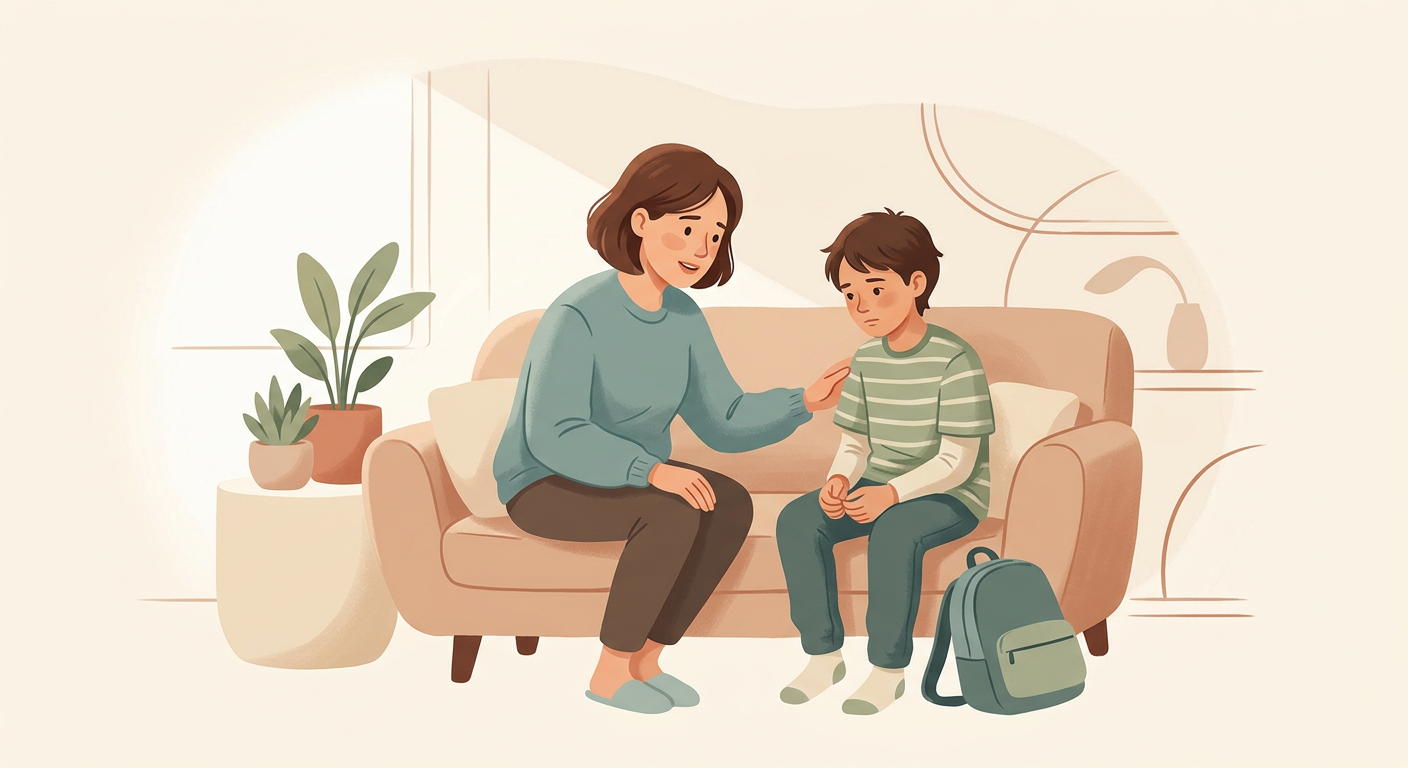
Your 11-year-old comes home from school very quiet and says 'nothing's wrong' when you ask.
This is just 1 of 100+ questions in the Parenting Test
Want to know your real style and get a full diagnosis? Takes 2 minutes, free.
Take the Parenting Test →Why this situation matters
Llegar a casa y percibir a tu hijo o hija inusualmente silencioso puede generar una mezcla de preocupación y curiosidad. Es una situación común para muchos padres, especialmente a medida que los niños entran en la preadolescencia, un periodo donde la independencia y la gestión de sus propias emociones se vuelven más complejas. Entender cómo aproximarse a esta situación es crucial para mantener la confianza y asegurar que se sientan cómodos compartiendo sus experiencias contigo.
Cuando tu hijo o hija no quiere hablar inmediatamente, puede significar muchas cosas: desde un malentendido menor con un amigo, hasta el cansancio después de un día, o incluso algo más significativo que aún no sabe cómo expresar. Tu reacción en esos momentos puede fortalecer o debilitar la comunicación futura. Es un acto de equilibrio entre respetar su espacio y asegurarles que estás disponible y eres un apoyo seguro.
La forma en que manejas estos momentos de silencio envía un mensaje potente sobre cómo valoras sus sentimientos y su necesidad de autonomía. Una respuesta empática y paciente puede abrir la puerta a conversaciones más profundas cuando estén listos. ¿Estás listo para descubrir cómo tu instinto te guía en estas situaciones delicadas?
The possible answers
Tap the option you would choose
What the experts say
Håkan Stattin
Örebro U., adolescence and communication
Daniel Siegel
UCLA, 'Brainstorm'
Devil's advocate
Common objection
But what if they're suffering something serious in silence? Should I just wait?
Why it falls short
If there are clear signs of risk, you absolutely intervene. For a regular day, calm availability is the way to go. If they haven't opened up in a week and you're still concerned, then you can talk more directly.
This is just 1 of 100+ questions in the Parenting Test
Want to know your real style and get a full diagnosis? Takes 2 minutes, free.
Take the Parenting Test →Related questions
Your 2-year-old falls, looks at you, assesses the situation for 3 seconds, and then starts crying as if they've had an amputation. They haven't actually hurt themselves at all. You...
Validar y regular
Your teenager has been holed up in their room for 3 days, irritable and snapping at everyone. You...
Conexión en la distancia
Your 16-year-old daughter, usually open, has been answering in monosyllables for a month. There's no apparent drama. You...
Conexión gentil, Autonomía respetada
Your child is crying inconsolably because a friend didn't invite them to their birthday party. You...
Validar y contener
Your 15-year-old tells you, 'sometimes I think the world would be better off without me.'
Ideación suicida verbalizada = consulta profesional, siempre.
At the birthday party, your 5-year-old loses the game of musical chairs and throws himself on the floor screaming, "I WANT TO DIE." There are 12 parents watching. You…
Validar, nombrar y guiar
Part of the Fami ecosystem
Sites made by families, for families. Start with the two most loved:
The task manager that coordinates your whole family — without the stress.
Visit →famiEduca.comA platform where children learn on their own, the fun way.
Visit →Worldwide guide of destinations and points of interest for family travel.
Restaurants where great food is also for the kids.
Challenges and games to rediscover the joy of playing together.
Easy recipes to cook with the little ones.
Films handpicked to watch as a family.
Reads for small big readers.