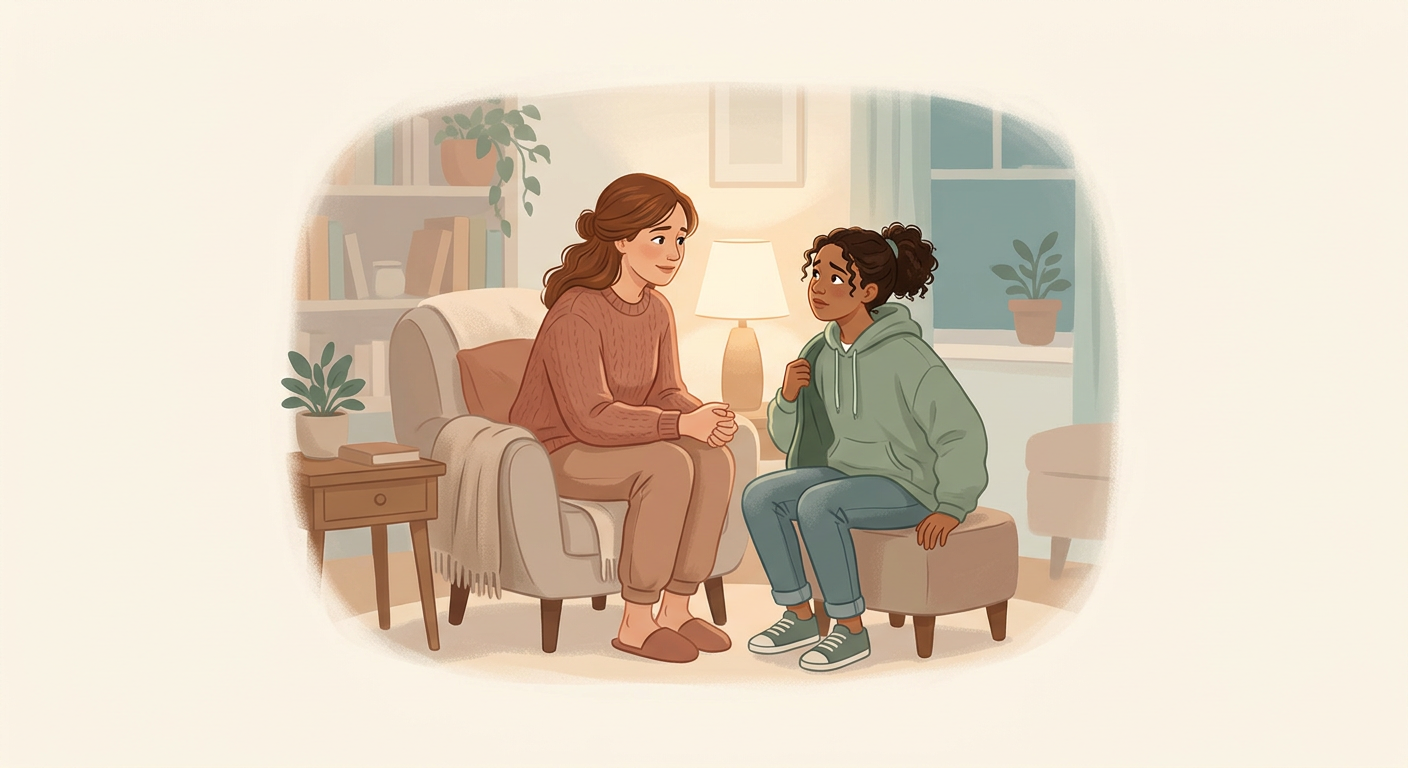
Your 14-year-old daughter arrives home two hours late without warning. She's fine.
This is just 1 of 100+ questions in the Parenting Test
Want to know your real style and get a full diagnosis? Takes 2 minutes, free.
Take the Parenting Test →Why this situation matters
La adolescencia es una etapa compleja, tanto para los jóvenes como para los padres. Cuando tu hija adolescente llega a casa dos horas tarde sin previo aviso, es natural que sientas una mezcla de alivio, preocupación y quizás incluso enojo. Cómo elijas reaccionar en este momento crucial puede sentar un precedente importante en vuestra relación y en el desarrollo de su sentido de responsabilidad. Tu respuesta no solo aborda el incidente en sí, sino que también comunica valores, límites y el tipo de comunicación que esperas en casa.
Es fundamental recordar que los adolescentes están en un proceso de búsqueda de independencia y de definición de su propia identidad. Si bien necesitan autonomía, también requieren límites claros y la seguridad de saber que sus padres están ahí para guiarlos y protegerlos. Una reacción desmedida o, por el contrario, la falta total de respuesta, pueden tener consecuencias a largo plazo, ya sea erosionando la confianza o enviando mensajes confusos sobre las expectativas familiares. La clave está en encontrar un equilibrio que fomente la responsabilidad sin dañar el vínculo.
Entender la psicología detrás de su comportamiento y abordar la situación de una manera constructiva es vital. Tu hija está aprendiendo a navegar el mundo, y tu guía es indispensable para que adquiera habilidades de toma de decisiones y aprenda sobre las consecuencias de sus actos. El modo en que gestionas este tipo de situaciones enseña más que mil palabras. Descubre cómo manejar este desafío de la mejor manera.
The possible answers
Tap the option you would choose
What the experts say
Judith Smetana
U. Rochester, adolescence and parental authority
Damon Korb
Adolescent pediatrician, 'Raising an Organized Child'
Devil's advocate
Common objection
If I don't punish her severely NOW, she won't care tomorrow.
Why it falls short
An adolescent brain with high cortisol doesn't learn; it only memorizes fear. Waiting 12 hours isn't losing authority — it's ensuring the conversation actually SINKS IN.
This is just 1 of 100+ questions in the Parenting Test
Want to know your real style and get a full diagnosis? Takes 2 minutes, free.
Take the Parenting Test →Related questions
Your teenager fails 4 subjects. You...
Autonomía con límites
Your 17-year-old comes home from a party. They smell of alcohol. They're walking fine and you picked them up in their friend's dad's car (the friend wasn't driving). You...
Diálogo retrasado, Límites claros
Your 15-year-old daughter arrives home an hour late from an outing and didn't answer her phone. You...
Diálogo, Límites Respetuosos
Your 14-year-old daughter asks you to drop her off at the corner, not right at the school gates, because she doesn't want to be seen with you. You...
Autonomía, Validación e Intimidad
Your 15-year-old tells you: "I'm going to Marcos's house to study." You know Marcos isn't home today. You...
Monitoreo transparente, Confianza bidireccional
You accidentally find messages on their phone suggesting they're trying alcohol on weekends. You…
Diálogo indirecto, confianza
Part of the Fami ecosystem
Sites made by families, for families. Start with the two most loved:
The task manager that coordinates your whole family — without the stress.
Visit →famiEduca.comA platform where children learn on their own, the fun way.
Visit →Worldwide guide of destinations and points of interest for family travel.
Restaurants where great food is also for the kids.
Challenges and games to rediscover the joy of playing together.
Easy recipes to cook with the little ones.
Films handpicked to watch as a family.
Reads for small big readers.